
 Buy Crypto
- Markets
 Futures
- Spot
- Copy Trade
- Earn
- More
After Jane Street Halts 10% Sell-Off, BTC Sees Strong Rebound

Original Title: "Jane Street Stops '10 AM Selling Pressure,' BTC Strongly V-Rebounds Toward $70,000 Key Level"
Original Author: Ding Dang, Odaily Planet Daily
Market data shows that in the past 24 hours, BTC has experienced a V-shaped strong rebound, once approaching the $70,000 key level, currently trading at around $68,000, with a 6.1% increase in the last 24 hours. The prices of ETH and SOL have also shown very strong performance, following Bitcoin's rebound with significant upward movement. ETH briefly surpassed $2,100, with a 15% increase in 24 hours, currently trading at $2,050; SOL briefly surpassed $90, currently trading at $87, with an 8.1% increase in 24 hours. Market sentiment has significantly improved. All three have now reached key resistance levels, and attention is on whether they can hold steady and continue to rise.
In the U.S. stock market, the Dow rose by 0.63%, the S&P 500 index rose by 0.81%, and the Nasdaq rose by 1.26%; the crypto sector showed collective strength, with Circle rising by 35.47%, recovering its one-month decline in a single day.
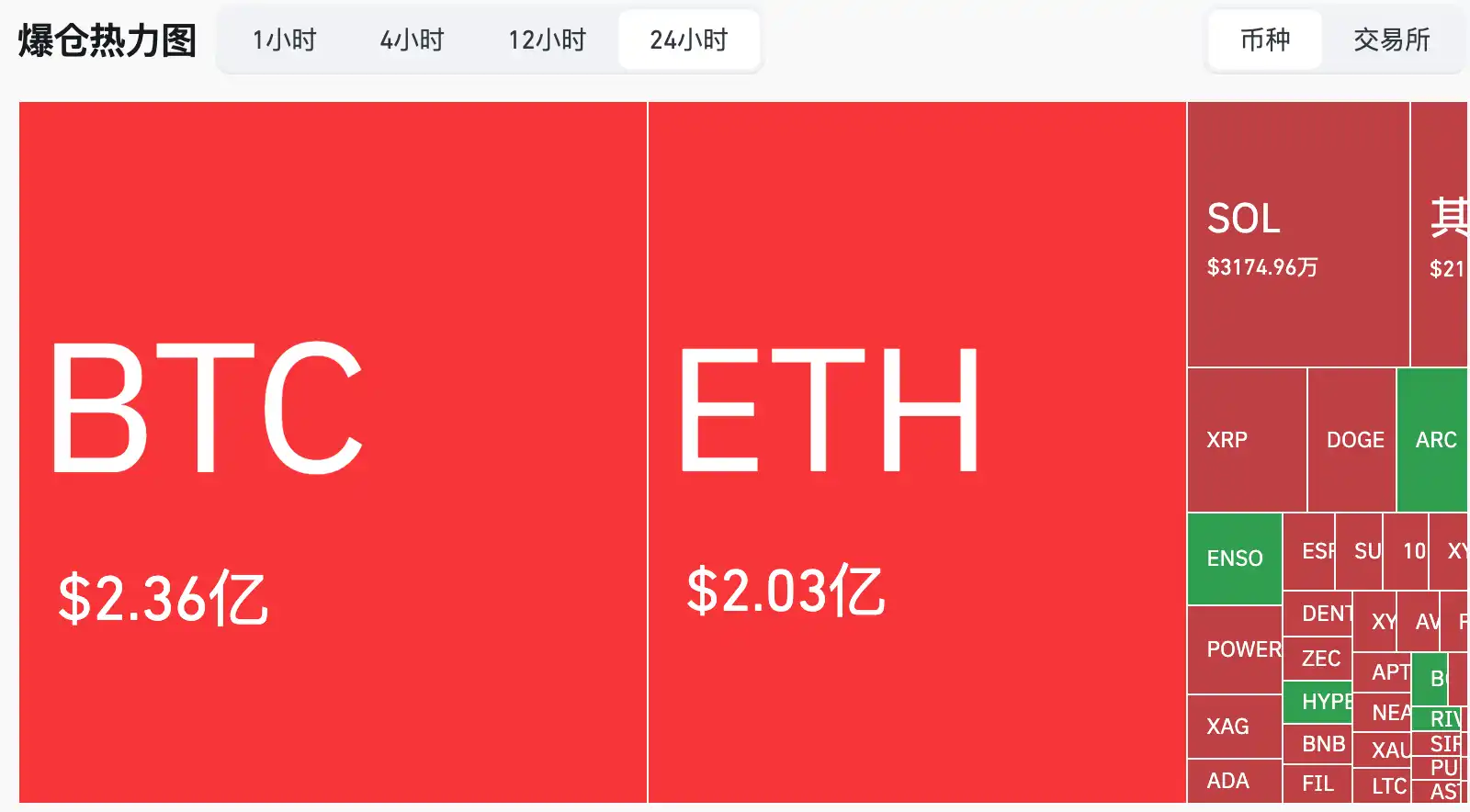
In the derivatives market, in the last 24 hours, the total liquidation amount was $579 million, with long liquidations totaling $115 million and short liquidations $464 million. The largest single liquidation occurred on Hyperliquid - BTC-USD, worth $10.4154 million.
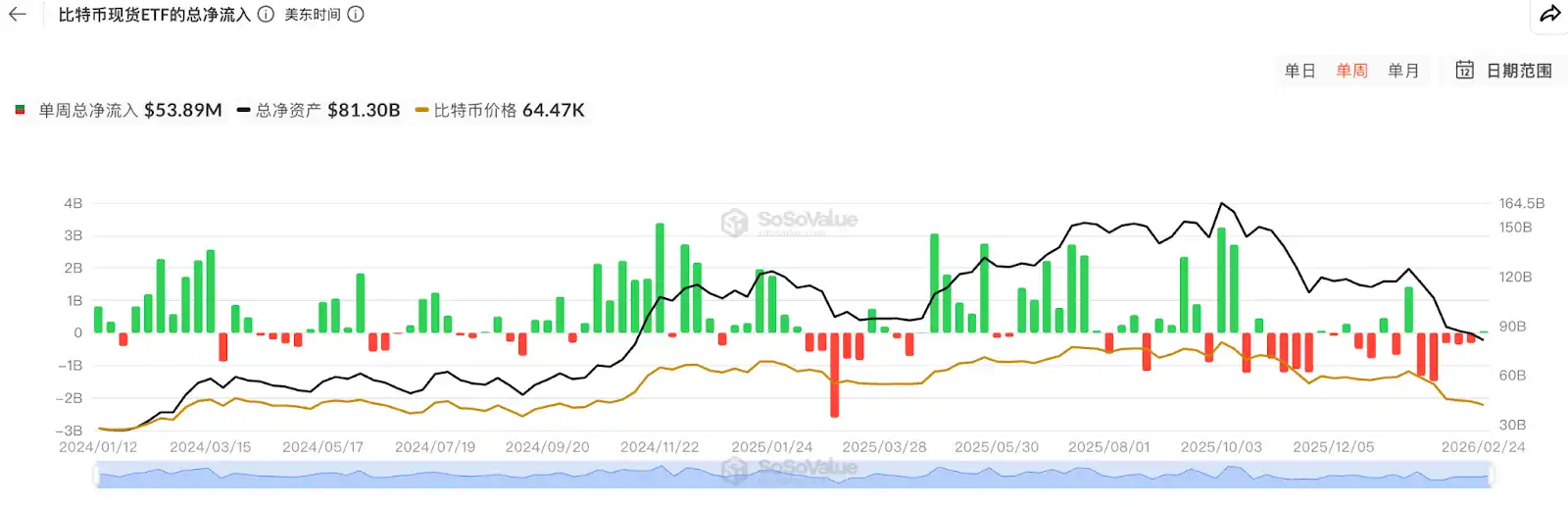
On the liquidity side, according to sosovalue data, yesterday's Bitcoin spot ETF recorded a net inflow of $250 million in a single day, possibly ending the previous five-week streak of net outflows. LookIntoChain observed that in the past 5 hours, BlackRock's Bitcoin exchange-traded fund IBIT saw a net inflow of 1,225 BTC, worth $83.92 million.
Bitcoin Should Be Worth At Least $150,000
This morning, a seismic event in the crypto industry began with a single statement: "As is well known, Bitcoin should now be worth at least $150,000."
The reason is that as Terraform Labs liquidates the market, suing the well-known U.S. market maker Jane Street, it has unveiled a months-long market suspicion storm. A lengthy article that quickly spread on X (by author Justin Bechler) linked three clues together, directly accusing Jane Street of systematically suppressing the Bitcoin price through a privileged position, causing it to be far below its "rightful" level.
The core allegations are divided into three acts:
Act One: Allegations of Terra/LUNA's Collapse Insider Old Debt. This act involves obtaining insider information through the private group "Bryce's Secret" created by former intern Bryce Pratt, enabling early exit and accelerating the collapse. The lawsuit claims that these trades were "impossible to execute without non-public information" and seeks compensation;
Act Two: The Eastern U.S. 10 AM "Preset Plunge" Pattern. Almost every trading day, Bitcoin experiences a mysterious 2-3% plunge around this time, precisely liquidating leveraged long positions, only to rebound hours later. On-chain analyses by Glassnode and others show a highly regularized algorithmic selling pressure. Interestingly, after the Terra lawsuit exposure, this "10 AM dive" pattern briefly disappeared; however, once the heat died down, it resurfaced;
Act Three: Ostensible Super Bullishness Masking Potential Massive Net Shorts. Public 13F filings reveal that Jane Street holds over 20 million IBIT shares (with a market value nearly reaching $25 billion), and MSTR positions surged by 473%, appearing to be extremely bullish. Nevertheless, insiders suggest that Jane Street outwardly accumulated a significant amount of Bitcoin spot inventory through ETF creation/redemption mechanisms, potentially leveraging it to issue a large volume of Bitcoin options. They then maintained directional neutrality through derivatives hedging, seemingly continuously injecting synthetic Bitcoin supply into the market, undermining Bitcoin's scarcity narrative and creating a long-term upward price resistance anchor;
The aftermath of this statement continues to brew, with the Terraform liquidator's allegations against Jane Street awaiting court rulings to verify. However, this dispute has provided the market with an emotional outlet.
Nevertheless, Monad co-founder Keone Hon also stated that the conspiracy theory of Jane Street suppressing Bitcoin below $150,000 is unfounded. Forcing the IBIT position of the shorts through long futures hedges implies that, on average, other parties will eventually hold short futures positions, which they must hedge with long spot positions. The sum of all positions in the market (converted to delta values) always equals Bitcoin's total supply (approximately 20 million coins). Of course, any party can independently decide to go short, thereby increasing long positions. In simple terms, hedging futures with ETFs implies that there are always matching positions in the market, allowing short-term distortions but making it difficult to violate the conservation of supply and demand in the long term.
Market Confidence Boosted by Two Earnings Reports
If conspiracy theories provided emotional tension to the market, perhaps what truly drove prices up were two earnings reports that exceeded expectations.
The first one came from Circle, which delivered a very impressive 2025 Q4 and full-year earnings report. Q4 revenue reached $7.70 billion, a 77% year-over-year increase and a 4.1% quarter-over-quarter increase, surpassing the market's previous expectation of $7.49 billion. Most importantly, the EPS (Earnings Per Share) also exceeded expectations by far, demonstrating a significant enhancement in profitability, mainly driven by the resurgence in USDC volume and interest income from the high-rate environment. At the same time, USDC circulation saw a significant year-over-year increase, on-chain transaction volume continued to expand, indicating that the structural demand for stablecoins is still on the rise, which is the core reason why the market has provided positive feedback. At the very least, it proves that the panic caused by the previous whale sell-off was more of a position rebalancing, with funds still staying within the crypto industry, likely just waiting for the right moment to "buy the dip."
The second earnings report comes from NVIDIA. Its Q4 revenue of $68.1 billion and data center revenue of $62.3 billion also exceeded market expectations, and once again provided an optimistic quarterly revenue forecast, guiding around $78 billion, higher than the market estimate of $73 billion, indicating that large-scale AI computing infrastructure is still on track.
This is crucial for the AI narrative; the market needs NVIDIA to prove that the AI investment frenzy can translate into sustainable returns and dispel concerns about the AI bubble.
Institutional Asset Allocation and Miner Sector Dynamics
There have been subtle changes on the demand side.
Several university endowment funds are adjusting their investment strategies amid declining returns on traditional assets, beginning to allocate to cryptocurrency ETFs. Harvard University and Brown University have disclosed positions in Bitcoin and Ethereum ETFs in their latest 13F filings. Although relatively small compared to their overall portfolio sizes, it shows that digital assets have moved from the fringes of institutional finance to the mainstream toolkit.
Against the backdrop of consecutive Bitcoin drops, many small and medium-sized DATs have surrendered, choosing to sell off their Bitcoin holdings or terminate their buy programs. It seems that only the Remain Strategy remains the market's sole bullish force, but DDC Enterprise Limited announced this week that they have added 50 bitcoins to their holdings. Their total Bitcoin holdings now amount to 2,118 bitcoins, making it the 34th largest holder of Bitcoin among global publicly listed companies, continuously increasing their Bitcoin holdings for the seventh consecutive week.
The dynamics in the miner sector are also worth noting. While the price of Bitcoin has fallen, the stock prices of several mining companies have risen against the trend, such as TeraWulf's stock price rising by 31% this month, Cipher Mining by 8%; Hut 8 by 6%; Core Scientific remaining mostly flat. Analysts believe that Bitcoin mining companies are currently one of the targets with a high short position by hedge funds. If the fundamentals improve, it may trigger a short squeeze, and these companies have locked in long-term and attractive power contracts, giving them a structural advantage in energy costs. Their strategic value lies not only in their Bitcoin mining business but also in the fact that capital is flowing towards "structural winners," while traditional mining companies may face marginalization risks.
Conclusion
This V-shaped rebound may not mark the beginning of a trend reversal, but it has accomplished something more important by providing a new framework for interpreting the market. As the market regains a rationale for the price surge, there is a possibility for the reconstruction of risk appetite.
You may also like

PUMP Valuation Breakdown: On-chain Data Disproves the "Fake Volume" Theory, Where Does the Real Discount Come From?

Tiger Research: What AI services do cryptocurrency companies offer?

The war not only drives up oil prices but also causes Circle's stock price to soar

When agents become consumers, who will rewrite the underlying logic of internet commerce?

AI Agents in Action Summit: March 31, Hong Kong Cyberport, focusing on the deep waters of AI implementation

29 Days In, What Are America’s Options on Iran?

Flash Crash Down 97%+ with Ongoing Unlocking, WLD Completes $65 Million Off-chain Funding: Who Is Still Buying?

Bitcoin for Real Estate? Fannie Mae Teams Up with Coinbase to Launch Crypto Mortgage
Tether Hires Big Four Auditor, USDT Enters First Attestation Phase

Google AI Paper Destroys $900B Storage Stock, Accused of Faking Experiment
Evaporate $2 Trillion, U.S. Stocks See Worst Start in 4 Years, Why is the Market Bearish?

The speed at which AI discovers vulnerabilities has surpassed the speed at which it patches vulnerabilities.

AI Crypto Trading Bot Explained: Aurora's Multi-Factor Strategy in WEEX Hackathon
Aurora demonstrates how structured, multi-agent AI Trading systems can deliver more adaptive and resilient performance in the WEEX AI Trading Hackathon.

Cyber Taoist Fortune Teller: Fake Taoist, AI Fortune Telling, and Northeastern Metaphysics History

Bloomberg: Stablecoin Payments Emerge as Crypto VC's Newest Favorite Thing
BeatSwap is evolving towards a full-stack Web3 infrastructure, covering the entire lifecycle of IP rights.
BeatSwap, a global Web3 Intellectual Property (IP) infrastructure project, is attempting to overcome the current fragmentation limitations of the Web3 ecosystem, building a full-stack system that covers the entire lifecycle of IP rights.
Currently, most Web3 projects are still in the stage of functional fragmentation, often focusing only on a single aspect, such as IP asset tokenization, transaction functionality, or a simple incentive model. This structural dispersion has become a key bottleneck hindering the industry's scale application.
BeatSwap's approach is more integrated, integrating multiple core modules into the same system, including:
· IP authentication and on-chain registration
· Authorization-based revenue sharing mechanism
· User-engagement-driven incentive system
· Transaction and liquidity infrastructure
Through the above integration, the platform builds an end-to-end closed-loop path, allowing IP rights to complete a full cycle of "creation, use, and monetization" within the same ecosystem.
BeatSwap is not limited to existing crypto users but is attempting to take the global music industry as a starting point, actively creating new market demand. Its core strategies include:
Exploring and incubating music creators (Artist discovery)
Building a fan community
Igniting IP-centric content consumption demand
The current global music industry is valued at around $260 billion, with over 2 billion digital music users. This means that the potential market corresponding to the tokenization and financialization of IP far exceeds the traditional crypto user base.
In this context, BeatSwap positions itself at the intersection of "real-world content demand" and "on-chain infrastructure," attempting to bridge the structural gap between content production and financial flow.
BeatSwap's upcoming core product "Space" is scheduled to launch in the second quarter of 2026. This product is defined as the SocialFi layer in the ecosystem, aiming to directly connect creators with users and achieve deep integration with other platform modules.
Key designs include:
A fan-centric interactive mechanism
Exposure and distribution logic based on $BTX staking
User paths connected to DeFi and liquidity structures
Thus, a complete user behavior loop is formed within the platform: Discovery → Participation → Consumption → Rewards → Trading
$BTX is designed to be a core utility asset within the ecosystem, rather than just a simple incentive token, with its value directly tied to platform activity and IP use cases.
Main features include:
· Yield distribution based on on-chain authorized actions
· Value reflection based on IP usage and user engagement dynamics
· Support for staking and DeFi participation mechanisms
· Value growth driven by ecosystem expansion
With the increased frequency of IP use, the utility and value support of $BTX will enhance simultaneously, helping alleviate the "disconnect between value and utility" issue present in traditional Web3 token models to some extent.
Currently, $BTX has been listed on several mainstream exchanges, including:
Binance Alpha
Gate
MEXC
OKX Boost
As the launch of "Space" approaches, BeatSwap is actively pursuing more exchange listings to further enhance liquidity and global accessibility, laying a foundation for future market expansion.
BeatSwap's goal is no longer limited to the traditional Web3 narrative but aims to target over 2 billion digital music users and a trillion KRW-scale content market.
By integrating content creators, users, capital, and liquidity into a blockchain framework centered around IP rights, BeatSwap is striving to build a next-generation infrastructure focused on "IP tokenization."
BeatSwap integrates IP authentication, authorization distribution, incentive mechanism, transaction system, and market construction to establish a unified structure that bridges the full lifecycle path of IP rights.
With the launch of the Q2 2026 "Space," the project is expected to become a key infrastructure connecting content and finance in the IP-RWA (Real World Assets) track.

Mag 7 Evaporates $2 Trillion | Rewire News Morning Edition



 App
App