
 Buy Crypto
- Markets
 Futures
- Spot
- Copy Trade
- Earn
- More
Binance Controls 65% of CEX Stablecoin Reserves – What It Means for Liquidity

Key Takeaways
- Binance holds a dominant 65% of stablecoin reserves across centralized exchanges, equating to $47.5 billion in USDT and USDC.
- This substantial control signifies Binance’s strategic positioning as a pivotal liquidity provider within the crypto market.
- Market outflows have decreased from $8.4 billion at their peak in late 2025 to $2 billion, highlighting a shift towards liquidity consolidation rather than market exit.
- Binance’s growing stablecoin reserves illustrate a 31% increase from the previous year, demonstrating its expanding influence.
- Competitors such as OKX and Coinbase are significantly trailing in terms of reserve holdings, emphasizing Binance’s structural market dominance.
WEEX Crypto News, 2026-02-19 09:12:32
Introduction to Binance’s Dominance in Stablecoin Reserves
In the rapidly evolving world of cryptocurrencies, the dynamics of stablecoin reserves have become a focal point of discussion and analysis. As of now, Binance has emerged as a powerhouse, controlling a staggering 65% of all stablecoin reserves held on centralized exchanges (CEXs). This translates to Binance’s ownership of about $47.5 billion in two major stablecoins: USDT and USDC, marking a significant concentration of liquidity within the platform. Liquidity, in the crypto realm, is synonymous with power, and Binance, with its vast reservoir, wields a considerable influence over market dynamics.
Understanding the Implications of Liquidity Consolidation
To comprehend the ramifications of Binance’s liquidity dominance, it is vital to delve into the core reasons behind this strategic reserve accumulation. Historically, the cryptocurrency ecosystem has witnessed significant fluctuations, driven by investor sentiments and external market forces. The late 2025 market scenario was characterized by a peak in redemption requests, reaching $8.4 billion, signaling a transient phase of panic. However, the market landscape has seen a reversal of this trend, with current outflows stabilizing around $2 billion.
This shift in market behavior underscores a critical insight: rather than abandoning the crypto landscape, capital is being strategically consolidated. Investors are gravitating towards platforms that offer robust liquidity and reliability. Binance, with its substantial reserves, epitomizes a perceived safe haven, drawing in volumes through its enhanced execution and reduced risk of slippage.
Dissecting Binance’s Stablecoin Data
Examining the data provides a clearer picture of Binance’s growing grip over the stablecoin market. Over the past year, the platform’s stablecoin holdings have surged from $35.9 billion to $47.5 billion. This 31% increase is not an incidental growth but rather a calculated move following the winding down of BUSD operations. The liquidity that shifted from BUSD has evidently found a new home in USDT and USDC under Binance’s purview.
The disparity between Binance and its competitors further highlights the structural nature of its dominance. With OKX holding $9.5 billion, Coinbase at $5.9 billion, and Bybit trailing with $4 billion, the gap is significant. This scenario is not merely a difference in numbers but reflects a fundamental shift in how liquidity is distributed across exchanges.
The Ripple Effect of Binance’s Market Influence
The influence of Binance’s liquidity is not confined to its immediate environment but creates ripples across the broader crypto market. With a total reserve pool, including various crypto assets, hovering above $155 billion, movements within Binance carry the weight to affect market-wide liquidity trends. This phenomenon elucidates the depth of Binance’s integration within the crypto market’s ecosystem.
Through its dominance in stablecoin reserves, Binance possesses the ability to influence market conditions significantly. This control allows the platform to facilitate smoother transactions, attract higher trading volumes, and possibly set future precedents in the market. Traders and investors, prioritizing stable liquidity, are enticed by such an environment, thereby reinforcing Binance’s market position.
The Strategic Implications of Binance’s Liquidity Hold
The strategic implications of Binance’s hold on stablecoin reserves extend beyond mere trading convenience. In an increasingly competitive market, possessing a substantial liquidity base provides Binance with a formidable competitive edge. It affords the exchange a unique ability to offer preferential rates, reduced transaction costs, and increased market participation, all of which are attractive to both retail and institutional investors.
In the context of evolving market conditions, Binance’s strategic consolidation of liquidity reflects a keen understanding of market dynamics. The platform’s approach not only caters to current demands for stability and reduced risk but also positions Binance as a proactive entity capable of navigating future market upheavals.
The Role of Perceived Security in Liquidity Trends
An underlying facet of Binance’s liquidity strategy is the perception of security that it manages to command. In a market fraught with uncertainties, the notion of security extends beyond technological safeguards. It encompasses the ability of an exchange to provide a stable trading environment, ensure prompt execution of trades, and maintain reliable access to funds.
As market uncertainties loom, the gravitational pull towards Binance’s secure trading environment becomes more pronounced. This inclination is fueled by historical precedents where smaller venues, lacking the reservoir of liquidity and reliability, faltered in volatile scenarios. Binance’s scale reassures traders of its capacity to manage extensive trading activities without compromising on stability.
Market Outlook: The Competitive Landscape
While Binance’s current position is indisputably dominant, the competitive landscape is dynamic and evolving. Other platforms are aware of the importance of liquidity and are taking measures to bolster their reserves. However, the gap in reserve holdings is not just a matter of competition but rather a structural issue rooted in Binance’s rapid evolution and foresight.
OKX, Coinbase, and Bybit, among others, continue to play their roles in the ecosystem, albeit on a much smaller scale. Their reserve holdings, while noteworthy, highlight the considerable journey required to approach Binance’s level of market control. The coming years will likely see these players optimize their strategies to capture a share of the market’s liquidity demands.
One critical question is whether these platforms, in their bid to enhance liquidity, will emulate Binance’s playbook or chart new paths that distinguish their market offerings. Their strategies in acquiring liquidity, negotiating partnerships, and augmenting technological capabilities will shape the next phase of market competition.
Reflections on Binance’s Market Strategy
Binance’s position in the market today is a testament to its strategic acumen and ability to read market signals accurately. As the context around stablecoins evolves, Binance has demonstrated the foresight needed to adapt to changing market dynamics proactively. This adaptability, anchored by a solid liquidity foundation, ensures that Binance remains at the forefront of market movements.
The analytics behind Binance’s liquidity strategy suggest a continuation of current trends, where liquidity remains a prime competitive factor. Given the cyclic nature of markets, Binance’s strong reserve base positions it favorably to respond swiftly to future demands while safeguarding its interests against potential market adversities.
A Comparative Perspective on Market Strategies
To put Binance’s approach into context, it is essential to consider how traditional markets manage liquidity and reserve distribution. Comparatively, traditional stock and bond markets operate on the principle of maintaining liquidity across expansive networks of financial institutions. In contrast, the crypto market sees liquidity consolidation more prominently focused on centralized entities like Binance.
Such a model raises pertinent questions about decentralization ideals while underscoring the efficiencies gained through concentrated power. Balancing decentralization aspirations with the practicalities of liquidity management is a narrative that continues to unfold, and Binance stands as a central character in this story.
Future Trajectories: Innovation and Regulation
While Binance’s current market hold is strong, the future is poised to bring forth new challenges and opportunities. Innovations such as the advent of decentralized finance (DeFi) platforms and blockchain technologies pose both threats and possibilities. However, with its current reserves and market strategy, Binance is well-equipped to either integrate these innovations into its infrastructure or address them through strategic collaborations.
Another layer of complexity resides in the regulatory sphere, where global frameworks will continue to shape the crypto narrative. Binance, being a major player, will inevitably face regulatory scrutiny. Its capacity to navigate these regulatory landscapes without compromising liquidity and market operations will play a crucial role in determining its sustained market relevance.
FAQ Section
What is the significance of Binance holding 65% of CEX stablecoin reserves?
Binance’s control over 65% of stablecoin reserves signifies its dominant position as a major liquidity provider in the crypto market. It enables Binance to offer smooth trading experiences and attract significant trading volumes.
How does liquidity consolidation affect traders?
Liquidity consolidation attracts traders by offering deeper liquidity and improved trade execution, reducing potential slippage during transactions.
Why are investors consolidating their capital around Binance?
Investors are seeking stability and reliability amid market uncertainties, leading them to Binance’s platform, which offers robust liquidity and perceived security.
How does Binance compare to its competitors regarding stablecoin reserves?
As of now, Binance significantly outpaces competitors like OKX, Coinbase, and Bybit in stablecoin reserves, underscoring its structural advantage in the market.
What challenges does Binance face in maintaining its market position?
Future challenges for Binance include addressing regulatory scrutiny and integrating emerging technological innovations such as DeFi to maintain its competitive edge.
You may also like

After two years, Hong Kong's first batch of stablecoin licenses finally issued: HSBC, Standard Chartered make the cut

The person who helped TAO rise by 90% has now single-handedly crashed the price again today

3-Minute Guide to Participating in the SpaceX IPO on Bitget

Top 5 Cryptos to Buy in 2026 Q1: A ChatGPT Deep Dive Analysis
Explore the top 5 cryptos to buy in Q1 2026 including BTC, ETH, SOL, TAO, and ONDO. See price outlooks, key narratives, and institutional catalysts shaping the next market move.

How to Earn $15,000 with Idle USDT Before Altcoin Season 2026
Wondering if altcoin season is coming in 2026? Get the latest market update, and learn how to turn your idle stablecoins waiting for entry into extra rewards up to 15,000 USDT.
Can You Win Joker Returns Without Large Trading Volume? 5 Mistakes New Players Make In WEEX Joker Returns Season 2
Can small traders win WEEX Joker Returns 2026 without huge volume? Yes—if you avoid these 5 costly mistakes. Learn how to maximize card draws, use Jokers wisely, and turn small deposits into 15,000 USDT rewards.

Altcoin Season 2026: 4 Stages to Profit (Before the Crowd FOMO In)
Altcoin Season 2026 is starting — discover the 4 key stages of capital rotation (from ETH to PEPE) and how to position before the peak. Learn which tokens will lead each phase and avoid missing the rally.

Will Alt season come in 2026? 5 Tips to Spot the Next 100x Crypto Opportunities
Will altcoin season arrive in 2026? Discover 5 rotation stages, early signals smart traders watch, and the key crypto sectors where the next 100x altcoin opportunities may emerge.

The bear market has arrived, and cryptocurrency ETF issuers are also getting involved

The richest man had a quarrel with his former boss
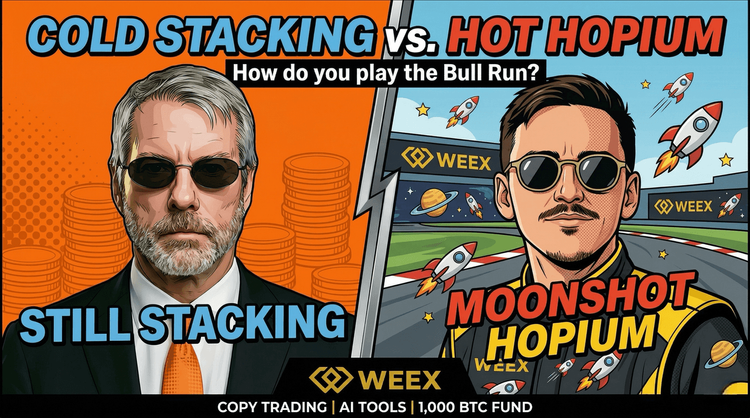
BTC Firm Above 70K! Saylor’s "Institutional Logic" vs. Moon’s "Retail Faith": Who is Really Harvesting the Market?
Bitcoin is holding firm above the $70,000 support level following a massive short squeeze that liquidated $427 million. As the "Four-Year Cycle" narrative shifts, the market is split: Michael Saylor’s cold, institutional "indiscriminate stacking" vs. Carl Moon’s high-energy retail "hopium." This article decodes these two polar-opposite strategies for the 2026 bull run and reveals how WEEX’s institutional-grade liquidity and AI trading tools empower every type of investor to convert market volatility into profit.

The Girl Who Created the SBTI Test: A Story of a Doomed Cyber Love, an E-Widow Ratfolk

B.AI Officially Launched: Building AI Agent Financial Bedrock Platform, Driving AGI Era Business Underlying Logic

B.AI Officially Launched: Breaking Down A2A Collaboration Barriers to Unlock the Smart Body Economy's Full Potential
We helped Xu Mingxing write a book called "<OK Life>".

Rare APY of 400%, is TradeXYZ handing out money to oil bulls?
a16z: Perpetual Contracts are Rewriting Global Trading Rules
Bitcoin Hits $73,000 Triggering $427M Short Liquidation | Carl Moon: $200,000 is the Target
April 9, 2026 (UTC+0), 22:17. Bitcoin (BTC) executed a high-velocity surge within minutes, heavy-hitting the $73,000 psychological barrier and touching a local high near $74,000. While the price has since retraced to consolidate above $72,000, this "instant ambush" successfully completed a $427M liquidation of short positions.
After two years, Hong Kong's first batch of stablecoin licenses finally issued: HSBC, Standard Chartered make the cut
The person who helped TAO rise by 90% has now single-handedly crashed the price again today
3-Minute Guide to Participating in the SpaceX IPO on Bitget
Top 5 Cryptos to Buy in 2026 Q1: A ChatGPT Deep Dive Analysis
Explore the top 5 cryptos to buy in Q1 2026 including BTC, ETH, SOL, TAO, and ONDO. See price outlooks, key narratives, and institutional catalysts shaping the next market move.
How to Earn $15,000 with Idle USDT Before Altcoin Season 2026
Wondering if altcoin season is coming in 2026? Get the latest market update, and learn how to turn your idle stablecoins waiting for entry into extra rewards up to 15,000 USDT.
Can You Win Joker Returns Without Large Trading Volume? 5 Mistakes New Players Make In WEEX Joker Returns Season 2
Can small traders win WEEX Joker Returns 2026 without huge volume? Yes—if you avoid these 5 costly mistakes. Learn how to maximize card draws, use Jokers wisely, and turn small deposits into 15,000 USDT rewards.


 App
App