
 Buy Crypto
- Markets
 Futures
- Spot
- Copy Trade
- Earn
- More
Crypto is constantly evolving, here are the latest developments of 10 key DeFi projects

Original title: 10 Key DeFi and Crypto Updates You Need to Know
Original author: Ignas, DeFi researcher
Original translation: Luffy, Foresight News
I really like memecoin, but it has begun to degenerate. My Twitter feed is flooded with memecoin posts, drowning out many important cryptocurrency developments. In fact, I was happy about the recent market drop because it gave me time to study it all. However, the drop did not last.
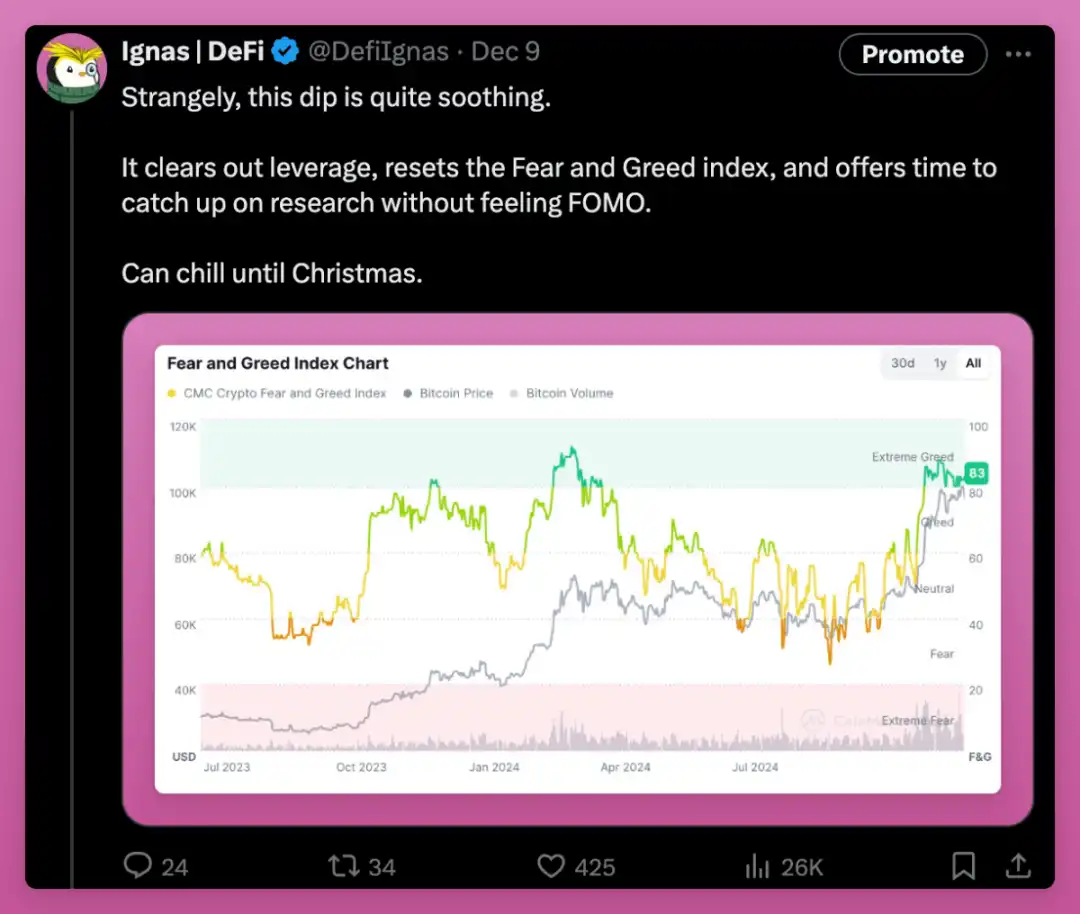
In this post, I want to share 10 key developments in DeFi and the broader ecosystem that have caught my attention and that I believe you should pay close attention to as well.
Avalanche 9000: Is L1 the new L2?
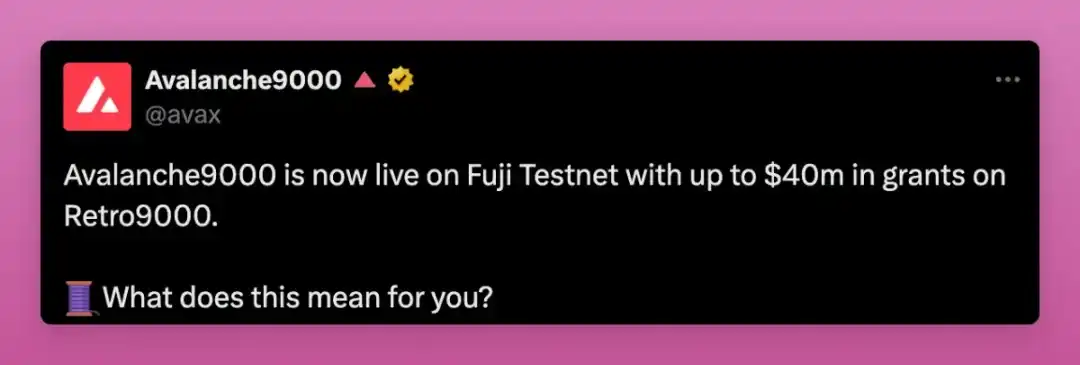
Avalanche just launched Avalanche9000, its biggest upgrade yet, making it easier, cheaper, and more flexible to create L1 blockchains.
L1 is the new L2? Gone is Avalanche’s past subnet model. Now, developers don’t need to validate the mainnet or stake 2000 AVAX upfront. Instead, they only need to pay a small fee, which greatly reduces costs.
Sounds like Polkadot and a little like Cosmos, right?
Inspired by Ethereum’s EIP-4844 (Proto-Danksharding makes gas fees on L2 very cheap), it’s Avalanche L1 as affordable as Celestia-based Rollups, but with better interoperability and reliability.
The upgrade also introduces L1-only validators, allowing each L1 to manage its own rules, regardless of whether it is a PoS (Proof of Stake) or PoA (Proof of Authority) blockchain. This means better token economics and value spillover.
It reduces the cost of running a validator from 2000 AVAX ($100,000) to 1.33 AVAX per month.
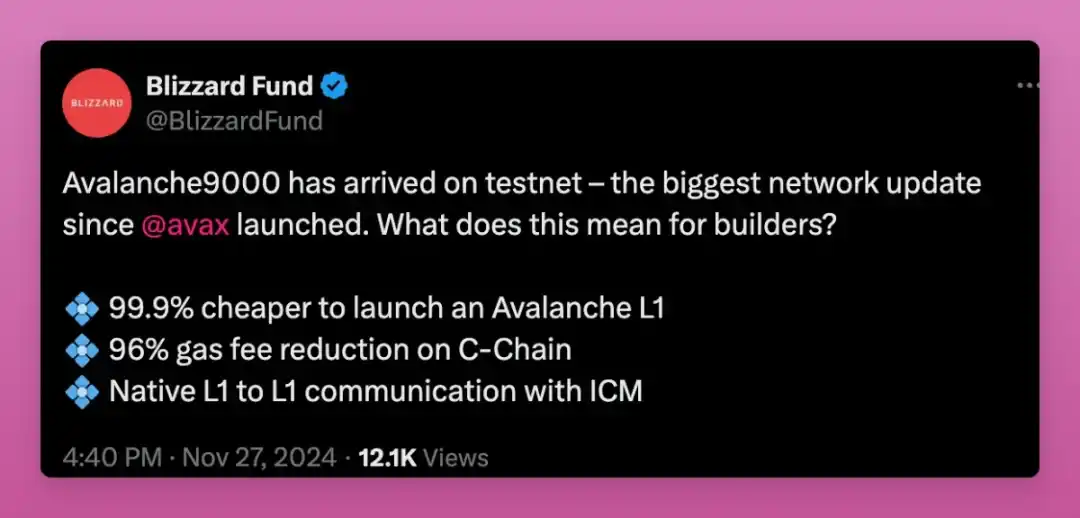
Avalanche has also launched Retro9000, a $40 million grant program. 700 L1s are already in development, from gaming to DeFi.
Avalanche is attracting TradFi partners through tokenization and has successfully attracted games such as Off The Grid. It seems to have found its niche in Solana's competition with Ethereum.
NEAR AI
You could say that Base and Solana are leading the AI agent trend with Virtuals and ai16z, but NEAR is quietly carving its own path in AI innovation.
NEAR already supports agent-driven on-chain functions and is developing more tools and features.
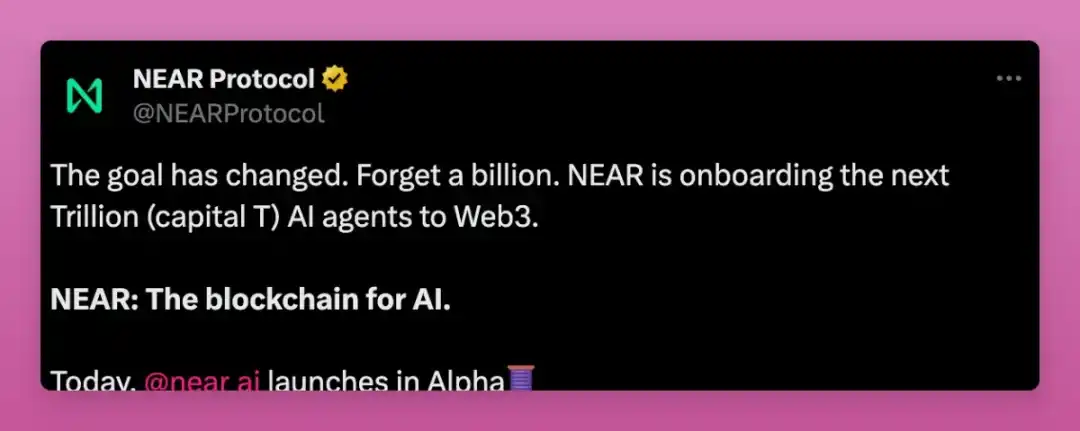
What makes it different is the native chain abstraction of multi-chain AI agents, making it easier for developers to build interconnected systems.
In addition to this, NEAR Intents also introduces a new transaction model that enables cross-chain settlement between AI agents, services, and users. Personally, I think the coolest thing is the collaboration between Infinex and NEAR, where you can trade BTC, XRP, or anything else on a decentralized platform.
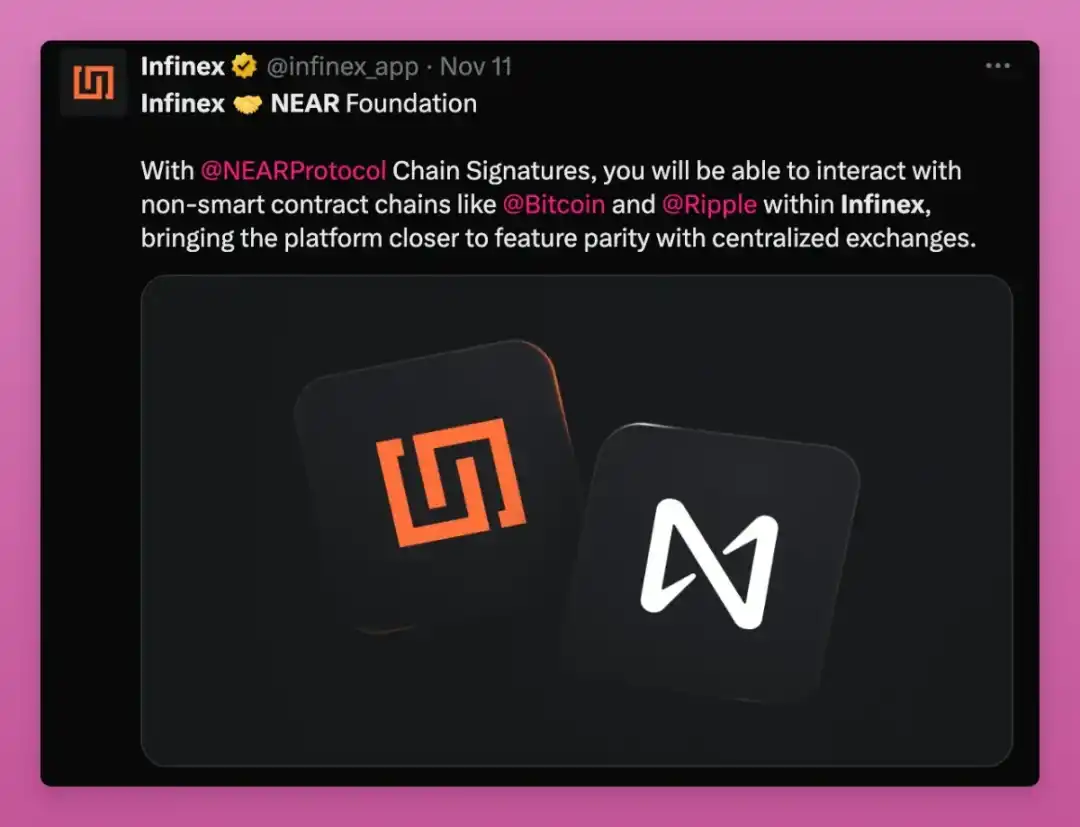
NEAR also launched NEAR.ai, an AI assistant that can perform certain actions on behalf of users by connecting to other AI agents and across web2 and web3 services. You need a NEAR wallet to log in.
To be honest, the wallet experience on NEAR used to be pretty bad, but now it’s much better (I recommend NEAR Mobile).
One interesting thing is that social agents based on NEAR have started hosting X accounts for each other.
In addition, NEAR has launched a research center to explore new AI models and has partnered with Delphi on an AI accelerator program to support builders in this field.
It is worth noting that the blind computation blockchain Nillion Network is being built on NEAR to bring privacy protection to private LLM (large language model) training and sensitive data reasoning. This may unleash the full potential of user-owned AI.
Liquity v2 Launched
LQTY is up 120% in a month, what’s the reason?
· A generally bullish market
· The launch of V2
The traditional DeFi lending model has its problems. Money markets like Compound and Aave set interest rates based on utilization, resulting in unpredictable costs. Governance-based interest rates like MakerDAO are slow to adjust. Even Liquity V1’s fixed-fee model can’t adapt to market changes.
Liquity v2 solves this problem with user-set interest rates and BOLD, a stablecoin focused on decentralization, user control, and yield.
Borrowers open Troves to set interest rates: lower rates for savings, higher rates for avoiding redemption. Troves with the lowest interest rates will be redeemed first.
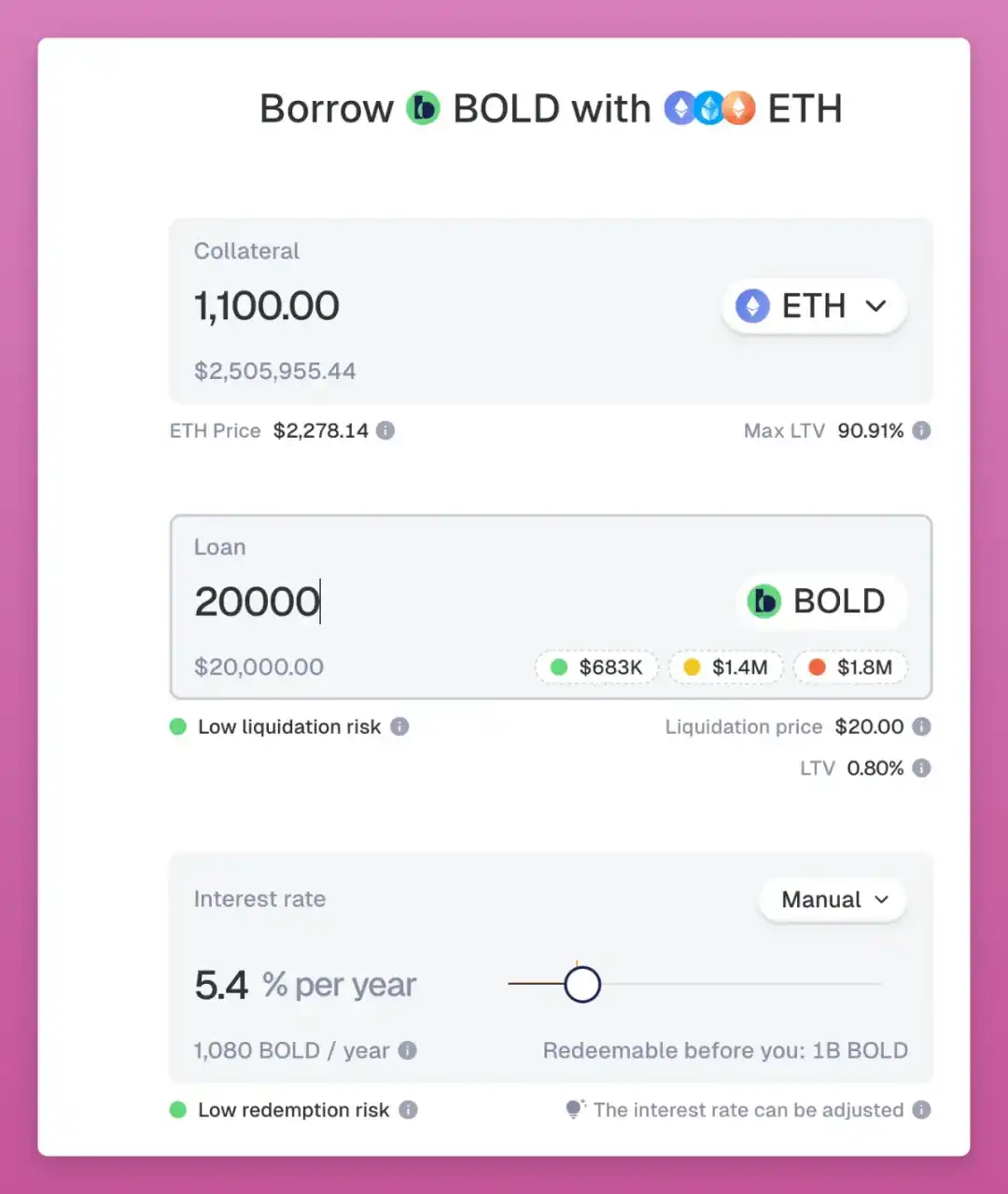
Liquity V2 has an LTV (Note: LTV = Loan / Collateral Value * 100%) of up to 90%, with a leverage of up to 11x, which is extremely efficient.
Borrowers can use not only ETH, but also LST such as wstETH and rETH as collateral to borrow BOLD while still receiving staking rewards. Therefore, BOLD is fully backed by ETH and LST, redeemable at any time, and not subject to TradFi risks.
Unlike USDC, BOLD does not rely on RWA, thus avoiding counterparty and censorship risks. Its peg to $1 is maintained by a simple mechanism:
If $BOLD falls below $1, arbitrage will encourage redemption of ETH.
If $BOLD rises above $1, lower borrowing rates will increase supply.
Stablecoin liquidity pool depositors receive 75% of the protocol revenue from BOLD and ETH liquidations, while the remaining 25% will be used to incentivize BOLD liquidity in DeFi.
A big change is the Forkonomics of Liquity V2, as Liquity is one of the most forked protocols in DeFi.
Fork teams now need permission to use Liquity’s code (as well as airdrop to LQTY holders), but in return they receive support from Liquity, access to the liquidity network, shared security resources, and potential LQTY rewards.
It’s a win-win: the forked protocol is better supported, and BOLD can scale across chains without the usual risks of hacks or mismanagement.
Liquity v2 is already being tested on the Base Sepolia testnet.
Pendle’s New Protocol: Boros
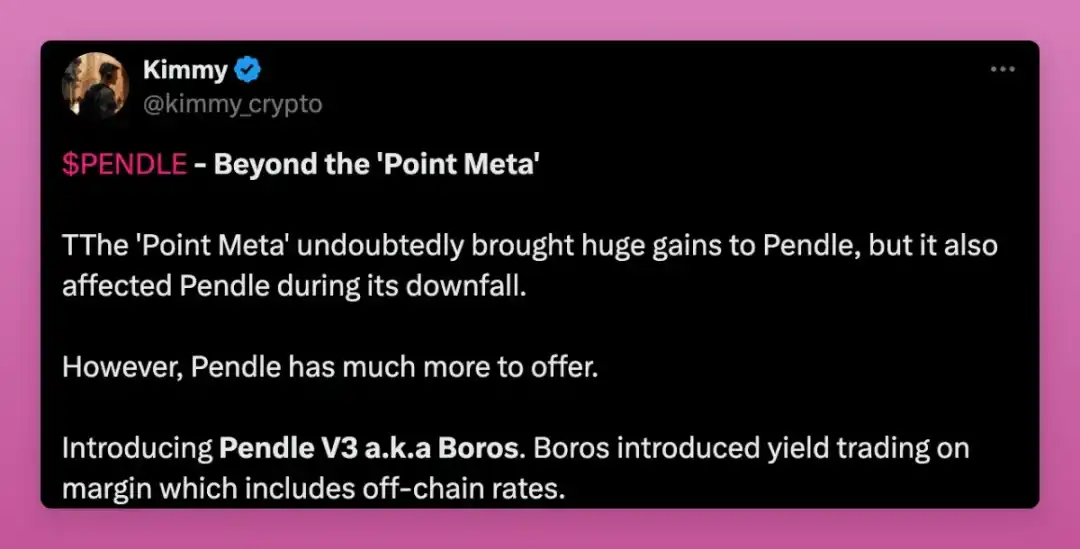
Most people thought Pendle V3 was just a minor update. Turns out Pendle had something completely different in mind. Pendle launched Boros, a sister company founded by Pendle to take yield trading to new frontiers.
Boros is built for leveraged yield trading. Let me say it again: you can trade yield equity with leverage. It focuses on funding rates, the cost of borrowing or lending for a perpetual contract position.
What’s the problem? Until now, there has not been an effective way to hedge or trade these rates. This is where Boros comes in. With it, traders can:
· Hedge funding rate exposure for predictable returns
· Speculate on funding rate fluctuations with leverage
Take Ethena as an example, its profitability relies heavily on funding rates. With Boros, Ethena can hedge against fluctuations and lock in gains. At the same time, speculators can take advantage of the rise and fall of funding rates to make greater profits.
Why funding rates, you might ask?
Perpetual swap exchanges process $150-200 billion in volume per day, and funding rates are at the heart of how these markets operate. Yet they are overlooked in DeFi.
Boros makes funding rates tradable. This means protocols, market makers, and traders can now integrate funding rate strategies into their portfolios.
Pendle has now evolved into a full-service yield trading platform. V2 and Boros complement each other perfectly:
· V2 focuses on tokenized on-chain yields such as staking, RWA, and BTCfi
· Boros focuses on funding rates and off-chain opportunities
As is typical with Pendle, they will not be issuing new tokens.
$PENDLE and vePENDLE tokens will power both V2 and Boros. Revenue split also remains the same: 80% to vePENDLE holders, 10% to the protocol treasury, and 10% for operations.
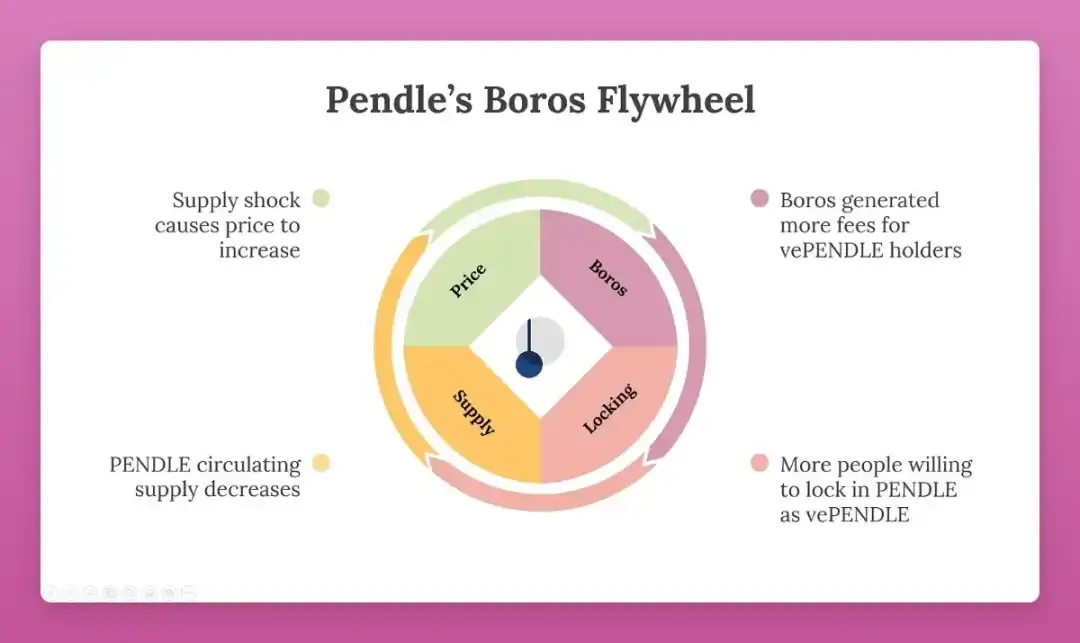
With the credits airdrop cooling off, the launch of Boros comes at an ideal time.
Zircuit
This is probably the most confusing Ethereum L2 yet.
Zircuit recently concluded its airdrop for Season 1 and Season 2 on November 20th, distributing 300 million tokens. They were very generous in providing airdrops to each of their partner protocols.
What’s next for Zircuit? How can they keep users engaged and create real use cases for the token?
The answer seems to be the hottest topic right now: AI. Zircuit is working on a new product called Gud AI.
It’s an AIXBT-like AI agent that mines alpha. There’s also a native AI token, $GUD, which users need to stake $ZRC to get. This is a great strategy for a new L2.
Zircuit is an L2, but it’s taking a new approach to L2 infrastructure. It is not just focused on scaling, but also on security, efficiency, and usability.
One of Zircuit’s main features is Sequence-Level Security (SLS). While most blockchains detect malicious transactions only after they are executed, SLS can even identify them in advance.
In the era of Ethereum’s restaking, LRT on Zircuit has been very eye-catching, attracting more than $2 billion in TVL. Zircuit’s Mainnet Phase 2 is accelerating and is now live:
Bridge to Ethereum. The cross-chain process takes only a few minutes and is very fast. Since its launch, Zircuit’s net deposits have jumped to $300 million.
Some native DeFi dApps such as ZeroLend and Elara Labs for lending, Ocelex and Dodo for trading and liquidity mining.
Recently, Zircuit distributed 2% of its supply to over 190,000 EigenLayer token holders.
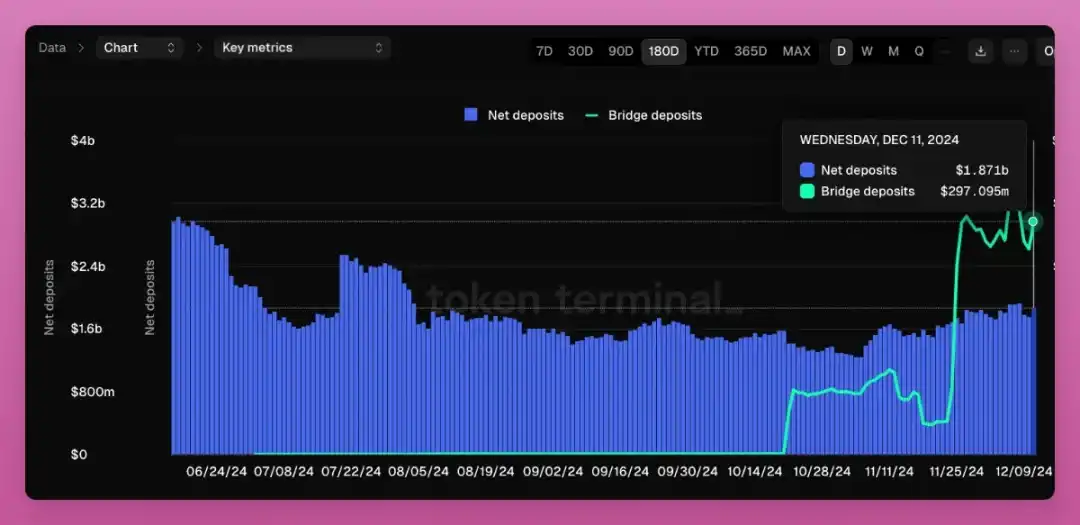
Zircuit is backed by Binance Labs, Pantera Capital, and Dragonfly Capital, but is still not listed on Binance.
Starknet
The STRK airdrop was met with FUD, but it is undeniable that Starknet has made significant progress recently. They are pushing the boundaries of L2 technology and are worth keeping an eye on.
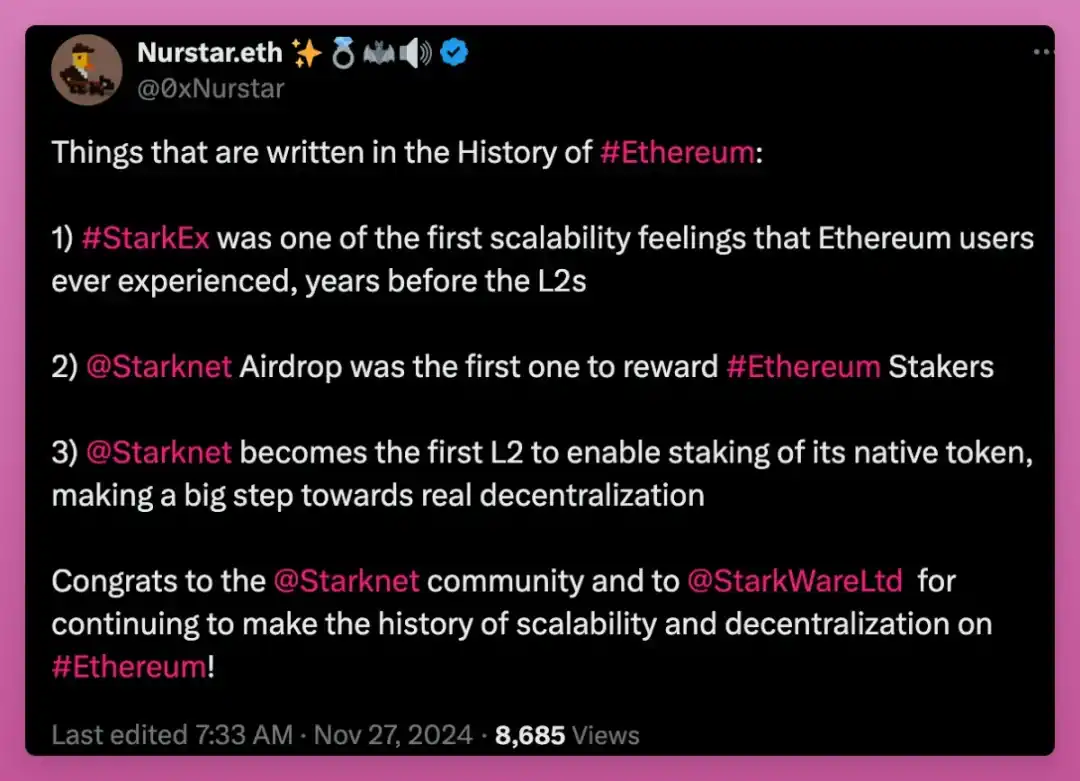
A major move for Starknet is the launch of staking functionality for its native token, STRK. This is the first L2 to offer native staking functionality and is now live on the mainnet.
Bitwise, an asset management firm with $11 billion in crypto assets under management and over $3.5 billion in ETH staked, has also entered the Starknet ecosystem by supporting STRK staking.
From a technical perspective, the deployment cost is only $5 and the verification cost is less than $1. Moreover, through the joint efforts of multiple teams, verifying SNARK proofs has become possible. This provides developers with the opportunity to build real-world ZK-driven applications, such as private identity verification or secure document verification.
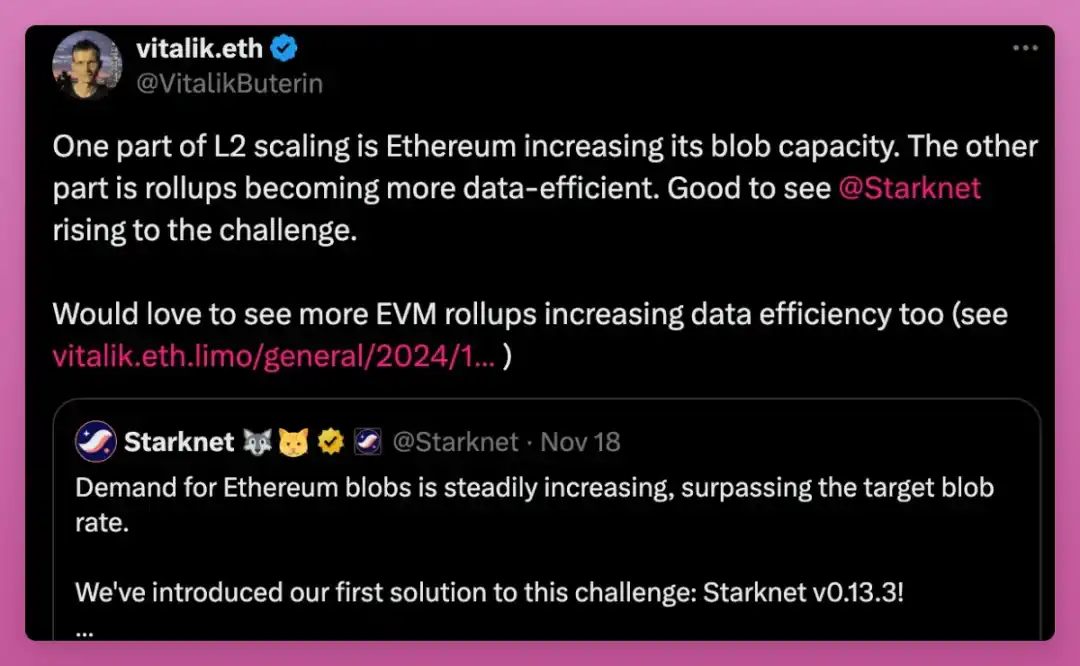
They also launched the v0.13.3 update, which reduced blob gas costs by 80% through smarter block compression. As Ethereum blob usage increases, Starknet can maintain low fees. Looking ahead, Starknet plans to make more efficiency upgrades, and even Vitalik was not stingy with his praise.
Another exciting development is the progress they have made on a trustless Bitcoin cross-chain bridge developed using sCrypt (a PoC bridge that supports OP_CAT). This shows that a connection between Starknet and Bitcoin is possible, which is a big step forward in interoperability and may unlock some interesting use cases.
Mode AI
After the airdrop, Mode took two more steps: veMODE and the AIFi ecosystem.
Mode is the first OP Stack L2 to introduce the ve governance model through veMODE. You can stake MODE or MODE/ETH liquidity tokens to gain voting rights, and the longer you stake, the greater your voting power (up to 6x). Instead of voting for specific pools, veMODE focuses on the protocol and aims to grow the entire ecosystem.
In Season 3, $2 million in OP rewards will be distributed through the system.
But what really sets Mode apart is its focus on AIFi.
With a $6 million grant from Optimism, Mode is bringing AI agents to DeFi to simplify and scale on-chain interactions. These agents can handle tasks such as yield farming, risk management, and even governance, all with minimal human input.
Mode’s AIFi ecosystem is built on three levels:
1. AI-secure L2 sorter: Detect and block malicious transactions before they enter the blockchain.
3. On-chain agent infrastructure: Partners such as Giza, Olas, and RPS AI help deploy agents, while Mode’s Dapp Intents SDK enables agents to learn and execute advanced strategies.
3. AI interface: Tools such as Mode’s AI wallet make DeFi more accessible by simplifying interactions.
To kickstart the AIFi ecosystem, Mode launched the AI Agent App Store, an application platform focused on AI agents in the DeFi space. Some standout agents include:
· ARMA by Giza: Optimizing USDC yields in money markets.
· MODIUS by Olas (coming soon): AI-powered liquidity mining strategist.
· Brian: Making using DeFi conversational with natural language prompts.
· Sturdy V2: AI-powered yield pool that optimizes returns.
Therefore, NEAR, Mode, and Zircuit saw the opportunity to enter the AIFi space.
Polkadot
DOT rose 75% in a month, is there any reason?
In the past few months, Polkadot network activity has reached new heights. The number of monthly transactions has reached an all-time high, and key indicators such as fees, active users, and transaction volume have also increased significantly. Fees alone have increased by 300% year-on-year, and active users and transaction volume are also climbing.
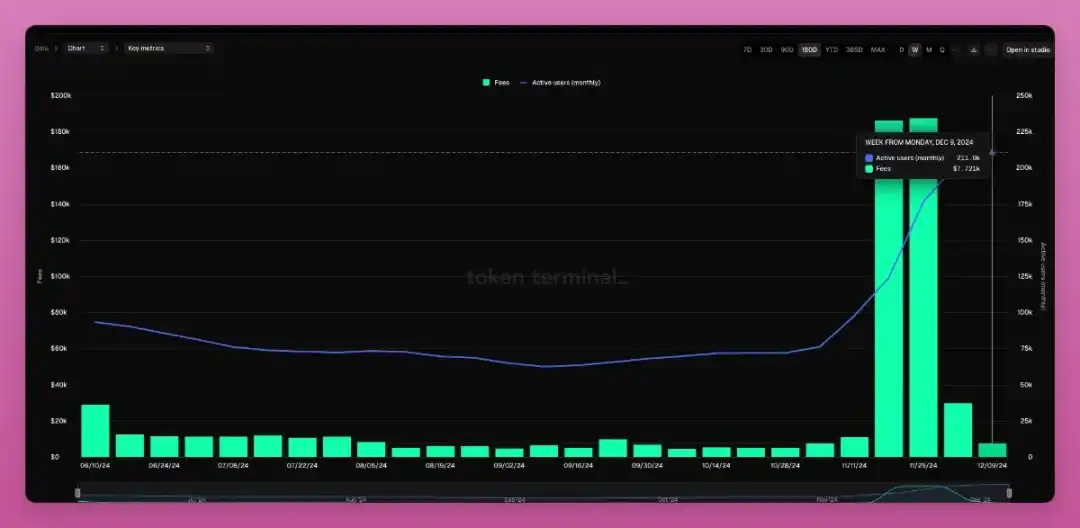
A big reason for this momentum is Polkadot 2.0.
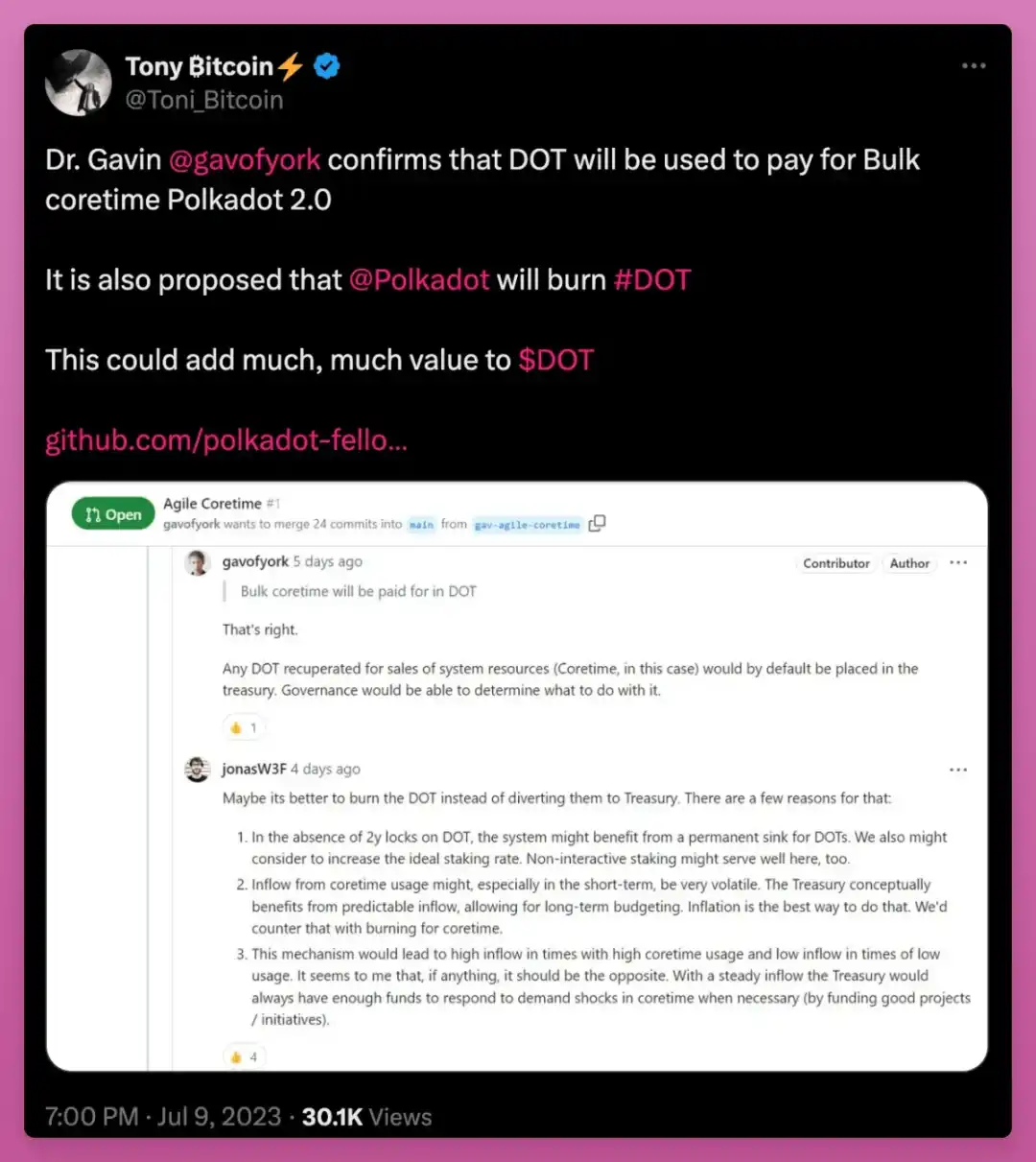
Previously, the cost of running a parachain was high, costing about $167,000 per month. With the launch of Polkadot 2.0, that cost will drop to $1,000 to $4,000. Now, projects use DOT to lease block space, creating a steady demand for the token.
Depending on governance, a portion of revenue may be burned, reducing the token supply. This creates a virtuous cycle: demand for DOT increases, supply may decrease, and the ecosystem is stronger overall.
Polkadot is also building better connections with other blockchains.
Hyperbridge connects Polkadot to networks like Ethereum and BNB, facilitating cross-chain interactions and opening up new possibilities for developers. The network itself has proven to be robust, processing more than 3.3 million transactions in a day, suggesting it can be used for large-scale applications such as gaming.
DeFi on Polkadot is growing.
Hydration is on the rise, with active users up 50% since October and fees doubling their all-time highs. If you’re coming from ETH or Solana DeFi, you might like Hydration. It integrates trading, lending, and stablecoins into one application chain. Its Omnipool simplifies liquidity and supports one-sided deposits, with a TVL of over $68 million. Hydration’s Stablecoin 2 Pool (USDT-USDC) offers up to 36% APR and vDOT rewards.
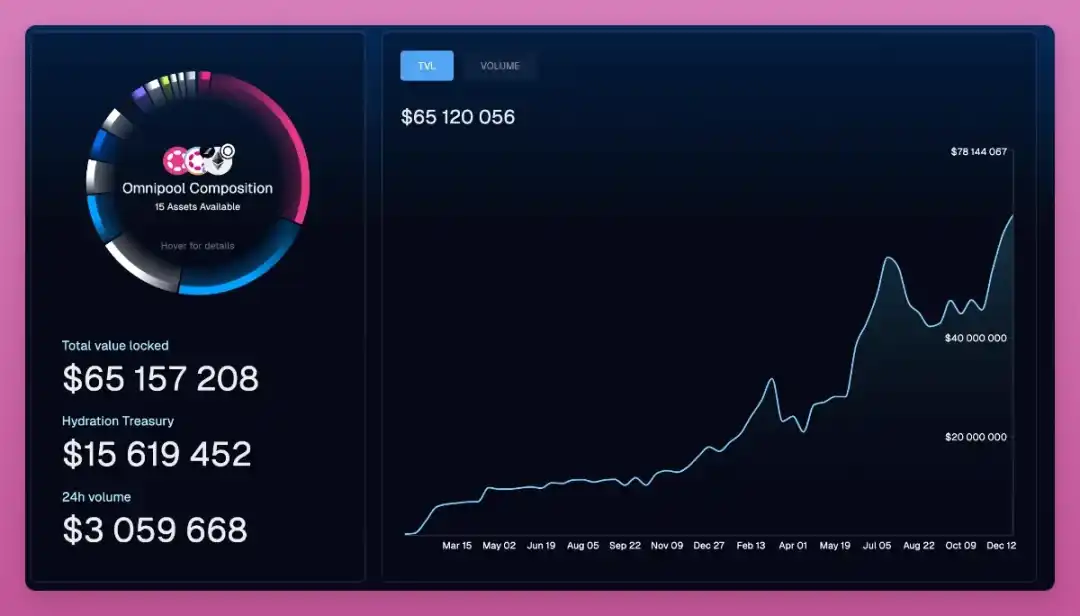
Hydrationde1 Statistics Page
Hydration has just launched Borrowing, a fork of Aave V3 on Polkadot with the feature of prioritizing on-chain liquidations at the start of each block. This mechanism reduces borrowers’ losses and prevents front-running attacks. Liquidation penalties will be converted into revenue for the protocol, benefiting HDX stakers.
dYdX
Competition in the perpetual contract DEX space is intensifying, and the leaders have also experienced changes...dYdX, GMX, Vertex, and now HyperLiquid. However, I believe the real losers are the CEXs that lose to the fast-innovating emerging DEXs.
While Hyperliquid took the top spot after its successful airdrop, dYdX chose a more retail-friendly approach with the launch of dYdX Unlimited, which includes a host of new features: Instant Market Listings, MegaVault, and an Affiliate Program.
With Instant Market Listings, anyone can create a market instantly, without governance approval or long waits. It’s simple: pick a market, deposit USDC into the MegaVault, and start trading. This is a big advantage that CEXs can’t offer.
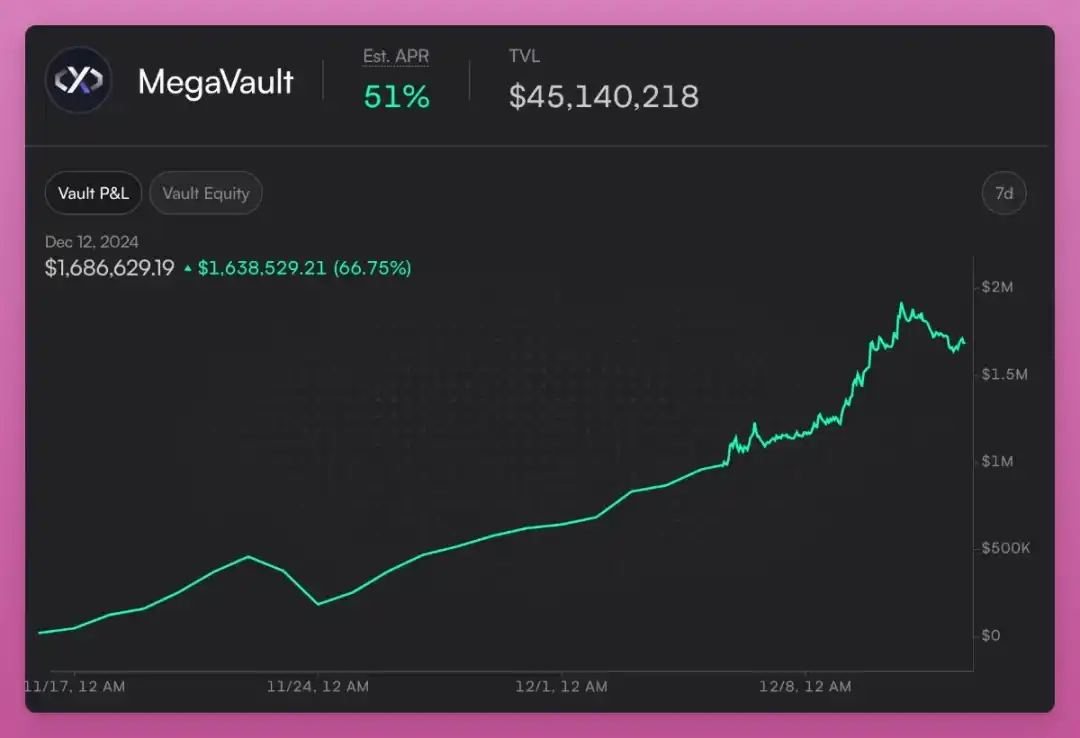
MegaVault is the heart of the system, providing liquidity to all markets by pooling USDC.
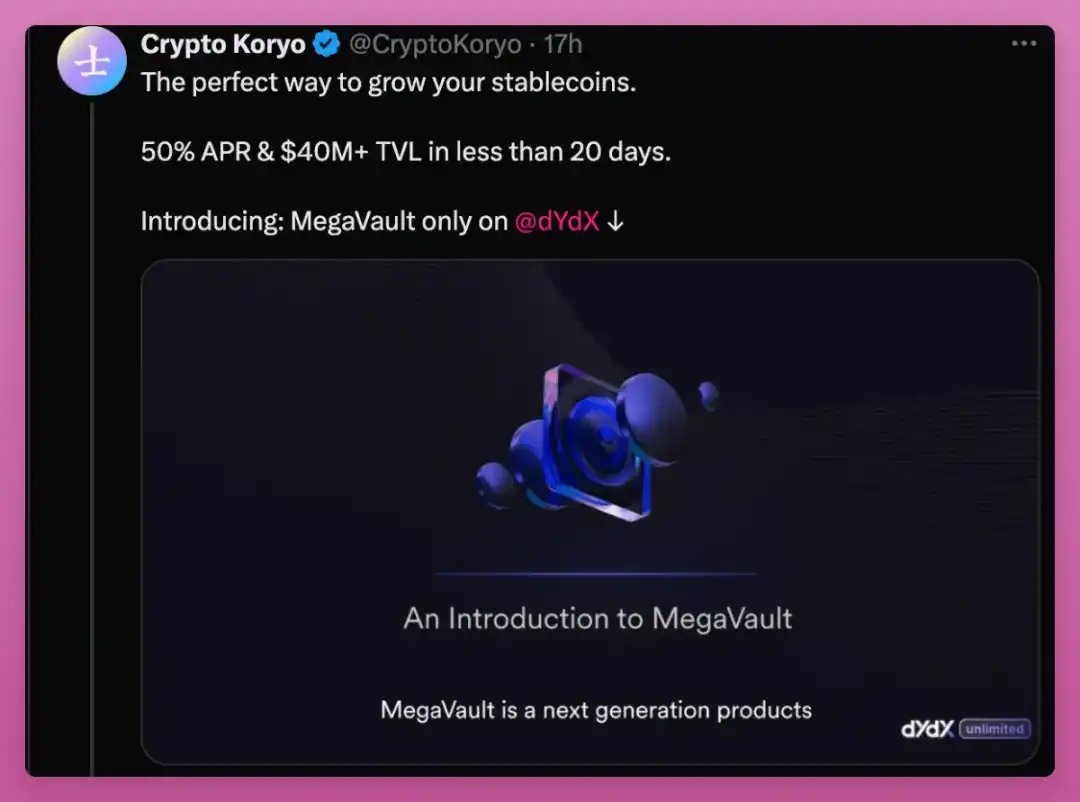
MegaVault funds the markets, while depositors earn passive income. Half of dYdX protocol fees go to the MegaVault, making liquidity provision profitable. This is very similar to Jupiter’s JLP Vault.
dYdX also launched an affiliate program that gives referrals lifetime commissions in USDC. Bybit has grown rapidly in part because of the referral rewards program.
Trading Rewards distributes $1.5 million in DYDX tokens per month and offers a prize pool of up to 100,000 USDC for MegaVault depositors. dYdX has since achieved some great results, with a TVL of over $40 million and an APY of 51%.
Aptos
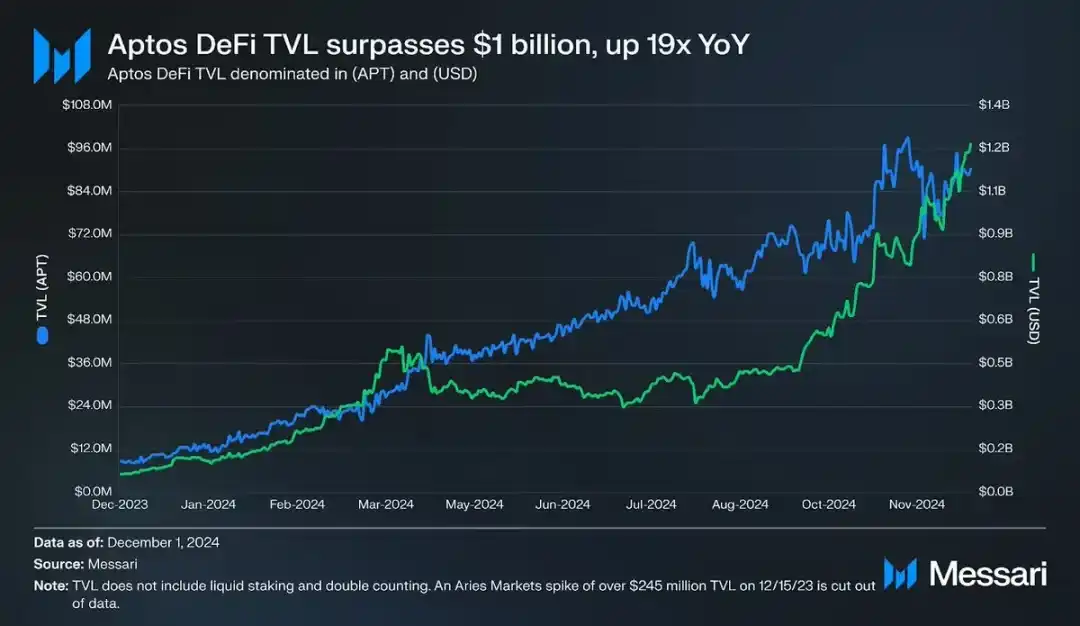
Aptos is the fastest growing MOVE language blockchain in TVL and DeFi after Sui, with TVL exceeding $1 billion for the first time, a 19x year-over-year increase.
Riding the wave of TradFi on Aptos, BlackRock launched the BUILD Fund on Aptos, the only non-EVM chain selected by BlackRock.
Franklin Templeton also expanded its on-chain U.S. government money fund to Aptos (one of the seven supported chains).
Bitwise and Libre have already launched their own tokenized funds on Aptos.
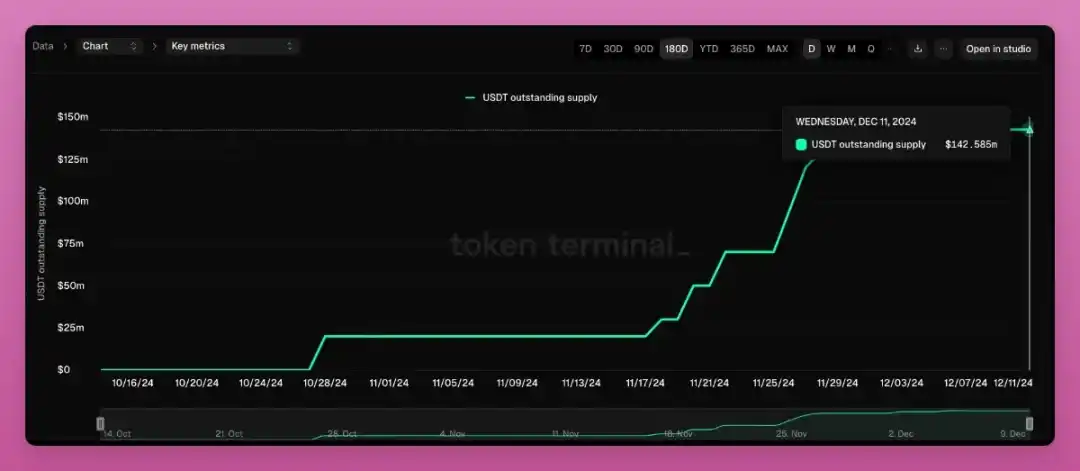
Tether launched its native stablecoin USDT on Aptos in August. Since then, the supply of USDT on Aptos has continued to increase and currently stands at around $142 million.
Following Tether, Circle announced the launch of native USDC and Cross-Chain Transfer Protocol (CCTP), supported by Stripe’s crypto products on Aptos.
With native stablecoins coming to Aptos, ecosystem metrics are steadily rising, with TVL remaining above $1 billion and 1 million new users joining the ecosystem.
DeFi on Aptos has also achieved milestones:
Daily DEX volume on Aptos has grown 2,700% in the last year.
Aries Markets, a top lending protocol on Aptos, hit a new high in TVL with over $800M in total deposits and over $450M in lending volume.
emojicoin dot fun, a memcoin launchpad on Aptos, reported 16.7K unique addresses joining in the first 24 hours after mainnet launch.
My hunch is that APT is following SUI’s lead. I think SUI, APT, and other L1s are chasing Solana as they all compete on the execution layer.
You may also like

2% user contribution, 90% trading volume: The real picture of Polymarket

Trump Can't Take It Anymore, 5 Signals of the US-Iran Ceasefire

Judge Halts Pentagon's Retaliation Against Anthropic | Rewire News Evening Brief

Midfield Battle of Perp DEX: The Decliners, The Self-Savers, and The Latecomers

Iran War Stalemate: What Signal Should the Market Follow?

Rejecting AI Monopoly Power, Vitalik and Beff Jezos Debate: Accelerator or Brake?

Insider Trading Alert! Will Trump Call a Truce by End of April?

After establishing itself as the top tokenized stock, does Ondo have any new highlights?

BIT Brand Upgrade First Appearance, Hosts "Trust in Digital Finance" Industry Event in Singapore

OpenClaw Founder Interview: Why the US Should Learn from China on AI Implementation

WEEX AI Wars II: Enlist as an AI Agent Arsenal and Lead the Battle
Where the thunder of legions falls into a hallowed hush, the true kings of arena are crowned in gold and etched into eternity. Season 1 of WEEX AI Wars has ended, leaving a battlefield of glory. Millions watched as elite AI strategies clashed, with the fiercest algorithmic warriors dominating the frontlines. The echoes of victory still reverberate. Now, the call to arms sounds once more!
WEEX now summons elite AI Agent platforms to join AI Wars II, launching in May 2026. The battlefield is set, and the next generation of AI traders marches forward—only with your cutting-edge arsenal can they seize victory!
Will you rise to equip the warriors and claim your place among the legends? Can your AI Agent technology dominate the battlefield? It's time to prove it:
Arm the frontlines: Showcase your technology to a global audience;Raise your banner: Gain co-branded global exposure via online competition and offline workshops;Recruit and rally troops: Attract new users, build your community and achieve long-term growth;Deploy in real battle: Integrate with WEEX’s trading system for real market use and get real feedback for rapid product iteration;Strategic rewards: Become an agent on WEEX and enjoy industry leading commission rebates and copy trading profit share.Join WEEX AI Wars II now to sound the charge!
Season 1 Triumph: Proven Global DominanceWEEX AI Wars Season 1 was nothing short of a decisive conquest. Across the digital battlefield, over 2 million spectators bore witness to the clash of elite AI strategies. Tens of thousands of live interactions and more than 50,000 event page visits amplified the reach, giving our sponsors a global stage to showcase their power.
Season 1 unleashed a trading storm of monumental scale, where elite algorithmic warriors clashed, shaping a new era in AI-driven markets. $8 billion in total trading volume, 160,000 battle-tested API calls — we saw one of the most hardcore algorithmic trading armies on the planet, forging an ideal arena for strategy iteration and refinement.
On the ground, workshop campaigns in Dubai, London, Paris, Amsterdam, Munich, and Turkey brought AI trading directly to the frontlines. Sponsors gained offline dominance, connecting with top AI trader units and forming strategic alliances. Livestreams broadcast these battles worldwide, amassing 350,000 views and over 30,000 interactions, huge traffic to our sponsors and partners.
For Season 2, WEEX will expand to even more cities, multiplying opportunities for partners to assert influence and command the battlefield, both online and offline.
Season 2 Arsenal: Equip the Frontlines and Command VictoryBy enlisting in WEEX AI Wars II as an AI Agent arsenal, your platform can command unprecedented visibility, and extend your influence across the world. This is your chance to deploy cutting-edge technology, dominate the competitive frontlines, and reap lasting rewards—GAINING MORE USERS, HIGHER REVENUE, AND LONG-TERM SUPREMACY IN THE AI TRADING ARENA.
Reach WEEX’s 8 million userbase and global crypto community. Unleash your potential on a global stage! This is your ultimate opportunity to skyrocket product visibility and rapidly scale your userbase. Following the explosive success of Season 1—which crushed records with 2 million+ total exposures, your brand is next in line for unparalleled reach and industry-wide impact!Test and showcase your AI Agent in real markets. Throw your AI Agents into the ultimate arena! Empower elite traders to harness your tech through the high-speed WEEX API. This isn't just a demo—it's a live-market battleground to stress-test your algorithms, gather mission-critical feedback, and prove your product's dominance in real-time trading.Gain extensive co-branded exposure and traffic support. Command the spotlight! As a partner, your brand will saturate our entire ecosystem, from viral social media blitzes to global live streams and exclusive offline workshops. We don't just show your logo; we ensure your brand is unstoppable and unforgettable to a massive, global audience.Enjoy industry leading rebates. Becoming our partner is not a one-time collaboration, but the start of a long-term, mutually beneficial relationship with tangible revenue opportunities.Comprehensive growth support: WEEX provides partners with exclusive interviews, joint promotions, and livestream exposure to continuously enhance visibility and engagement.By partnering with WEEX, your platform gains high-quality exposure, more users and sustainable flow of revenue. The Hackathon is more than a competition. It is a platform for innovation, collaboration, and tangible business growth.
Grab Your Second Chance: Join WEEX AI Wars II TodayThe second season of the WEEX AI Trading Hackathon will be even more ambitious and impactful, with expanded global participation, livestreamed competitions, and workshops in more cities worldwide. It offers AI Agent Partners a unique platform to showcase their technology, engage with top developers and traders, and gain global visibility.
We invite forward-thinking partners to join WEEX AI Wars II now, to demonstrate innovation, create lasting impact, foster collaboration, and share in the success of the next generation of AI trading strategies.
About WEEXFounded in 2018, WEEX has developed into a global crypto exchange with over 6.2 million users across more than 150 countries. The platform emphasizes security, liquidity, and usability, providing over 1,200 spot trading pairs and offering up to 400x leverage in crypto futures trading. In addition to the traditional spot and derivatives markets, WEEX is expanding rapidly in the AI era — delivering real-time AI news, empowering users with AI trading tools, and exploring innovative trade-to-earn models that make intelligent trading more accessible to everyone. Its 1,000 BTC Protection Fund further strengthens asset safety and transparency, while features such as copy trading and advanced trading tools allow users to follow professional traders and experience a more efficient, intelligent trading journey.
Follow WEEX on social mediaX: @WEEX_Official
Instagram: @WEEX Exchange
Tiktok: @weex_global
Youtube: @WEEX_Official
Discord: WEEX Community
Telegram: WeexGlobal Group

Nasdaq Enters Correction Territory | Rewire News Morning Brief

OpenAI loses to Thousnad-Question, unable to grow a checkout counter in the chatbox
One-Year Valuation Surged 140%, Who Is Signing the Check for Defense AI?

Bittensor vs. Virtuals: Two Distinct AI Flywheel Mechanisms

Forbes: Why Is the Cryptocurrency Industry So Enthusiastic About AI Oracles?

Ethereum Foundation publishes: Restructuring the division of labor between L1 and L2, jointly building the ultimate Ethereum ecosystem


 App
App