
 Buy Crypto
- Markets
 Futures
- Spot
- Copy Trade
- Earn
- More
Wall Street's Most Mysterious Money-Making Machine, Crashing Bitcoin Price at 10 a.m. Sharp Every Day

Once may be a coincidence, three times may be luck, but what about the 10th time?
Starting in the second half of 2025, some traders following Bitcoin's price trend on Twitter noticed something strange. They flipped through the past six months of Bitcoin's hourly chart and the more they looked, the more it seemed off: almost every day around 10 a.m., just as the US stock market was opening and during the most active minutes of market sentiment, Bitcoin would experience a sharp, clean drop, precisely wiping out the previous gains.
He shared this discovery on Twitter, only to find many others in the comments section who had made the same observation: "I've noticed it too," "It's been going on for several months," "This is definitely not a coincidence."
Financial media personality ZeroHedge went even further, starting from July of last year, tweet after tweet, pointing directly to the puppeteer behind the scenes, one of the main market makers for the Bitcoin spot ETF: Jane Street. After the 10 a.m. sell-off, Jane Street quietly absorbed liquidity, holding a position of over $25 billion in BlackRock's Bitcoin ETF, IBIT.
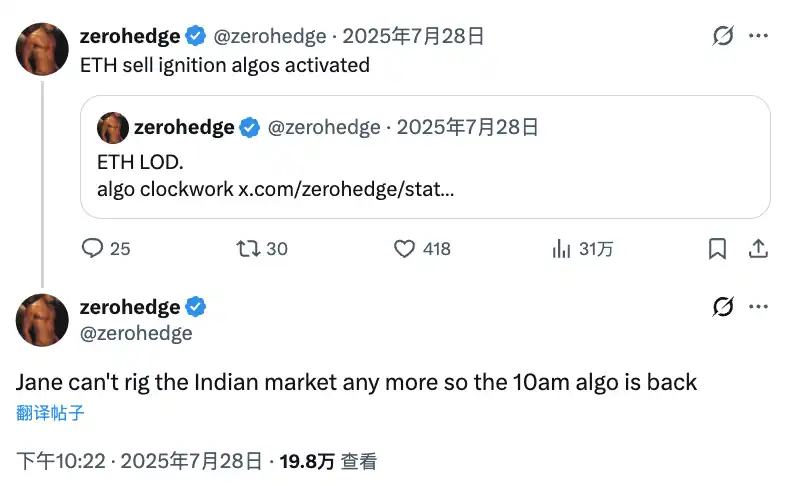

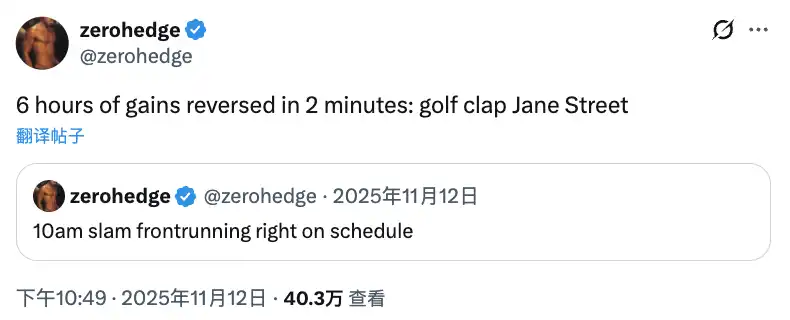
They even coined a name for this phenomenon, calling it the "Jane 10 a.m. Sell-Off Strategy." And what recently brought this rumor back into mainstream circulation was a lawsuit from Terra.
An Intern Named Bryce
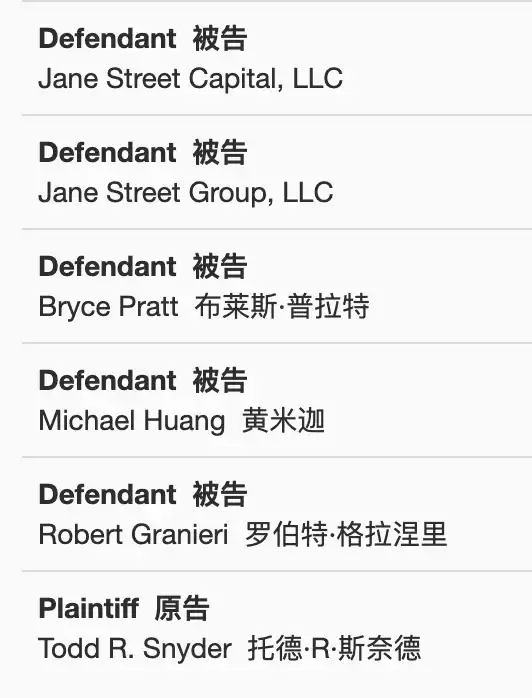
Recently, the bankruptcy trustee of Terraform Labs filed a lawsuit in court, with Jane Street, Jane Street's co-founder Robert Granieri, and two traders Bryce Pratt and Michael Huang as defendants.
This is an extremely low-profile company on Wall Street. It never grants media interviews, never flaunts its profits publicly, and for a long time, outsiders were unaware of its existence. However, within the financial industry, Jane Street's name is nearly known by all. It is an institution that has made hundreds of billions of dollars through quantitative trading and market-making business, with individual profits per year that have no equal across all of Wall Street.
The core fact alleged in the lawsuit is not that complicated: on the eve of the 2022 UST (TerraUSD) collapse, Jane Street, using non-public information obtained from insiders, prematurely liquidated its positions, quietly exiting just before the entire $40 billion Terra ecosystem went up in smoke.
And the starting point of this "insider information" trading was a young man named Bryce Pratt.
Bryce Pratt had previously interned at Terraform before joining Jane Street. Normally, an internship experience at a former company would just be a line on a resume. However, in this lawsuit, pages 29 to 31 were dedicated to describing him in detail for one reason: after leaving Terraform, he didn't truly leave.
He set up a private group chat, inviting Terraform software engineers and business development leads, naming the group "Bryce's Secret."
The name was both straightforward and bold. According to the lawsuit, the purpose of this group chat was to continuously channel internal Terraform information back to Jane Street. Simultaneously, Bryce facilitated introductions between Terraform's business development leads and Jane Street's "DeFi department" head, leading to regular communication under the guise of "exploring strategic investment partnerships."
From the lawsuit's perspective, Jane Street effectively turned this communication channel into an ongoing backdoor for obtaining significant non-public information.
Jane and Terraform: An Untold History
Let's rewind further back in time.
Jane Street's relationship with Terraform didn't start with Bryce Pratt's group chat but much earlier. It started in May 2021 during the first UST de-pegging event.
During that event, UST briefly deviated from its dollar-pegged price, causing concern across the Terra ecosystem. To stabilize the situation, Terraform Labs reached out to institutional trading partners for large-scale over-the-counter arrangements, with Jane Street being one of them.
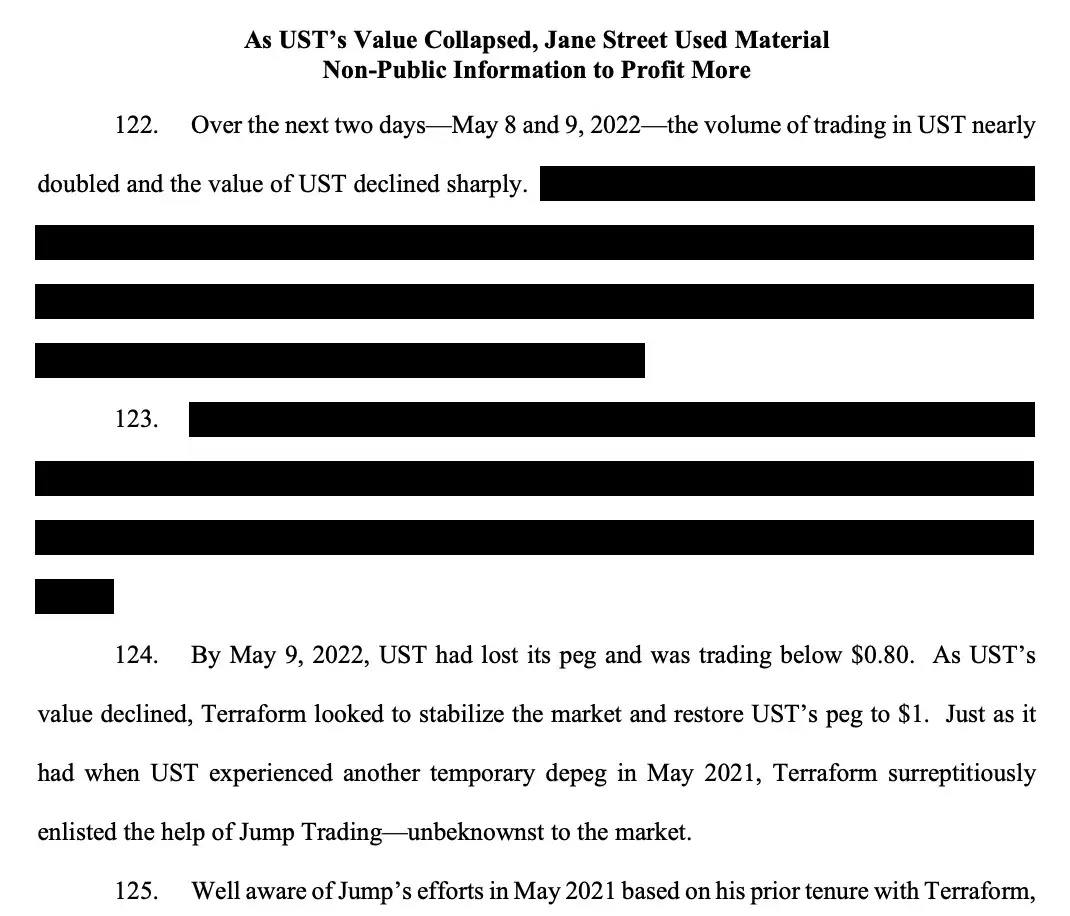
According to the lawsuit, in this relationship, Terraform had provided Jane Street with significant UST and Luna transaction volumes, at times offering discounts or structural incentives to ensure liquidity support during critical junctures. These terms were never disclosed to the outside world.
This means that the relationship between the two companies was not a simple market transaction from the beginning, but a protocol-driven interest alignment. It is this relationship that makes allegations of insider trading more difficult to shake off at a legal level. When you have a secret agreement with the other party and hold insider information unknown to the public, any transaction you make will seem highly unusual.
Fast forward to early 2022. At this time, the Terra ecosystem looked impeccable: the Luna Foundation Guard (LFG) had just been established, absorbed around $5.5 billion worth of Luna reserves, and used $3 billion to purchase other assets, presenting a seemingly unbeatable stance. However, beneath this shiny exterior, some signs had started to emerge: the Anchor Protocol's deposit size began to be under pressure, UST's reliance on the pegged exchange rate grew, and the speed of LFG's reserve consumption quietly accelerated.
Not many people were aware of these developments. But Jane Street happened to be one of them.
10 Minutes Before the Collapse of a $40 Billion Empire
May 7, 2022, 5:44 p.m. Eastern Time.
Terraform quietly withdrew 150 million TerraUSD from the Curve 3pool, a liquidity pool specifically designed for USD stablecoin swaps. No announcement, no warning, no public statement.
This operation was completely unknown to the outside world at the time.
However, less than ten minutes after this fund withdrawal, a wallet identified by on-chain analysts as associated with Jane Street withdrew 85 million TerraUSD from the same liquidity pool.
The indictment further pointed out that Jane Street's abnormal actions did not stop there. Before a significant UST depegging event occurred and public market panic began to spread, the addresses associated with Jane Street had already systematically offloaded risk, massively sold off UST, adjusted their related positions, and minimized their net exposure to the Terra ecosystem. Some specific numbers were redacted in the indictment, usually indicating involvement of trade secrets or evidence not yet in the public domain, but the traced fund flows on-chain were sufficient to paint the picture.
Meanwhile, Terraform and LFG were doing the exact opposite.
On May 7, Terraform bought over 250 million UST. On May 8, they bought over 200 million more. Over the next few days, they accumulated over 1.9 billion UST, along with over 90 million Luna. As for LFG, by May 16, its UST holdings surged from around 700,000 to over 1.8 billion, an increase of over 1.7 billion; Luna holdings skyrocketed from 1.7 million to over 222 million.
Another piece of evidence is a report released by on-chain data analytics firm Nansen on May 27th, titled "On-Chain Forensics: Demystifying the TerraUSD De-Peg". The report did not directly name Jane Street but described in detail multiple wallets playing key roles in the de-peg process, including one address later alleged to be associated with Jane Street. The report's conclusions were twofold: first, the movement of these funds occurred before a significant market panic; second, there was a significant time gap between these operations and the publicly visible collapse.
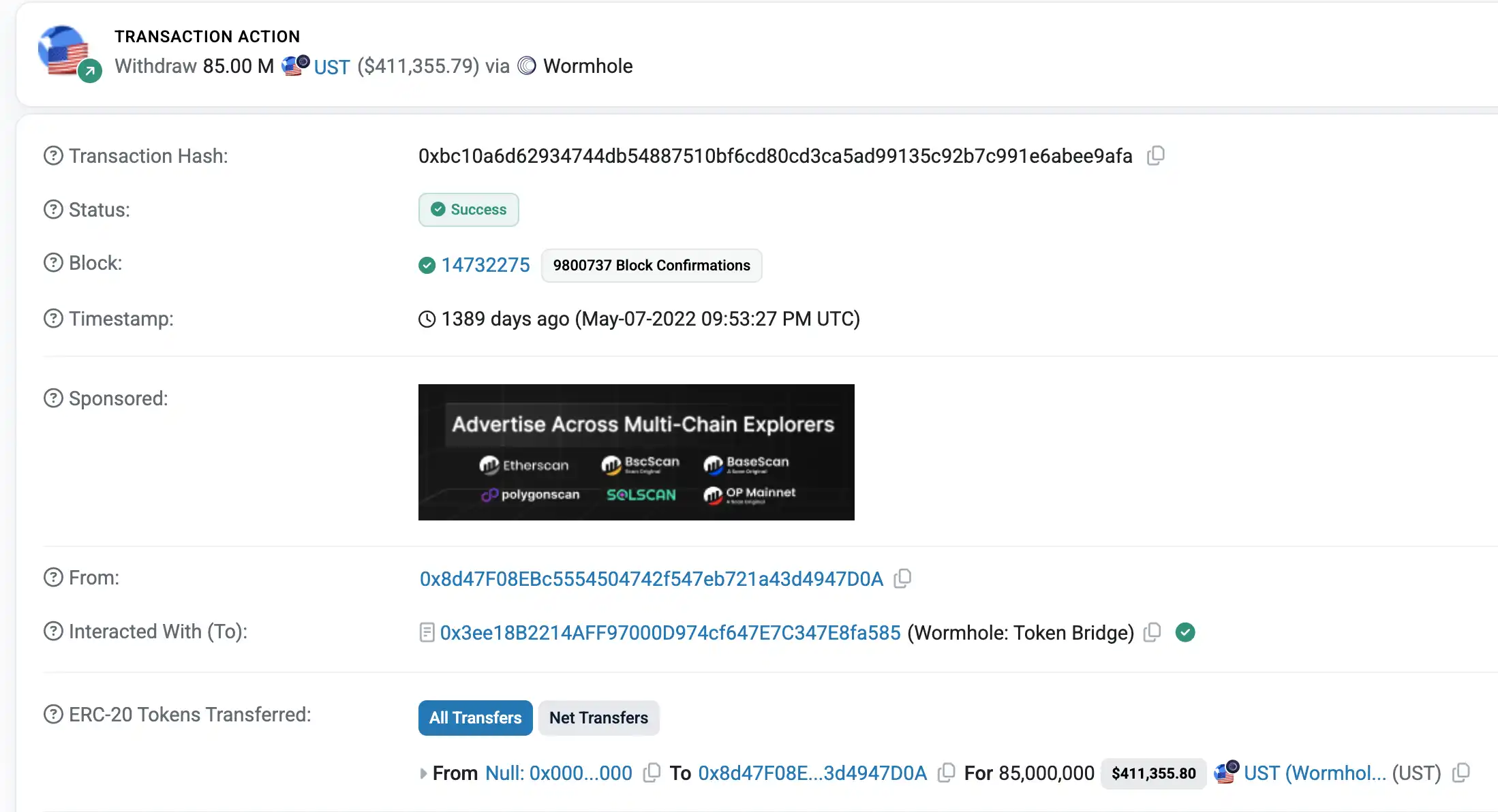
A suspected Jane Street-associated address withdrew 85 million TerraUSD
The complaint also mentioned that after the transaction on May 7th, Jane Street did not stop. They reportedly continued to leverage confidential information obtained from Jump Trading to further trade TerraUSD and expand their profits. Jump Trading had previously struck a deal with Terraform during the crash, ultimately profiting billions of dollars from the turmoil.
In India, they have done the same
Now, diligent researchers have discovered that after Jane Street was sued by Terra, the morning 10 a.m. sell-off disappeared. This seems to further confirm the rumors of the "Jane 10 a.m. sell-off strategy."
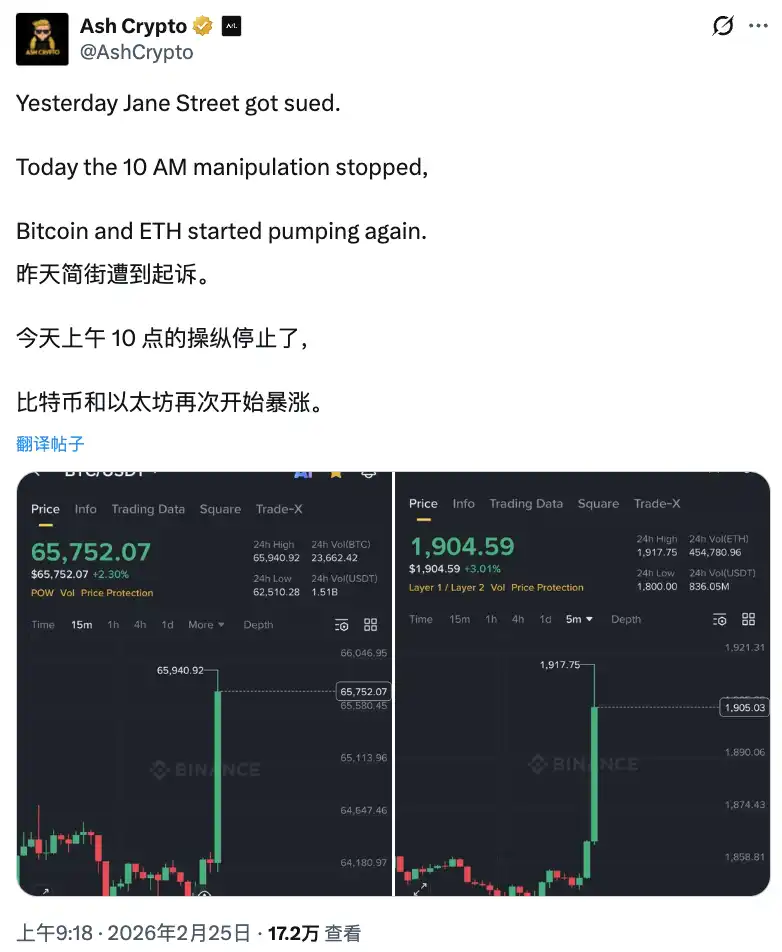
On the other side of the Earth in India, regulatory authorities had already formed their own judgment on Jane Street.
The Securities and Exchange Board of India (SEBI) issued a record-breaking penalty of 48.43 billion Indian Rupees, approximately $5.7 billion, through a 105-page interim order. This figure was unprecedented in Indian regulatory history, and SEBI's investigative findings read remarkably similar to the allegations in the Terra Luna case.
SEBI believes Jane Street executed a meticulously designed "pump and dump" strategy in the Indian market.
The logic goes like this: first, in the relatively illiquid spot and futures markets, the India Banking Index (BANK NIFTY) is manipulated up or down through large directional buy orders; once the price is moved to the desired level, an immediate reverse operation is conducted in the highly liquid options market to harvest retail investors who follow the trend; finally, the previously established spot positions are systematically offloaded, causing the index to fall back, rendering the options held by retail investors worthless, while the value of the held reverse positions skyrockets.
SEBI cited a specific example in its report: on January 17, 2024, Jane Street established long positions of around $67 million in just 8 minutes, with a trading volume more than three times that of the market's second-largest participant, solely driving the index up by over 1% with this buy order.
The regulator's language was blunt, stating that Jane Street's actions were "trading to influence prices, rather than trading based on prices," constituting "intentional, carefully planned, malicious conspiracy and deception," with the sole intent to mislead the market, particularly taking advantage of the large, inexperienced retail investor base.
Jane Street has long been a typical example of this narrative. The company is known for its extreme secrecy, never granting media interviews, never boasting to the outside world. It has amassed astonishing wealth through quantitative trading and market-making operations, holding an almost mythical status within the industry. During recruitment season, the compensation figures it offers make all Wall Street's entry-level graduates go crazy, with competitiveness rivaling any top-tier institution.
However, at some point in time, the story about this company began to get complicated.
In the Terra Luna case, it was accused of using insider information to exit early, completing its retreat in Terraform and LFG when billions of dollars were desperately pumped into the market.
In the Indian market, it was identified by regulatory authorities as systematically manipulating spot and derivative prices, harvesting ordinary investors.
Alameda Research, the core team of the FTX ecosystem that plunged the entire crypto industry into a dark moment, has a significant portion of its members from Jane Street, and its founder SBF has acknowledged that his market mindset was acquired at Jane Street.
Furthermore, Jane Street is also known for actively suing departing employees, displaying a rare level of assertiveness in standing up for their rights, uncommon throughout Wall Street.
An earlier investigative report even connected Jane Street to arms procurement funding in a coup attempt in South Sudan, although the details of the event remain highly disputed.
The market is not a fairy tale, information is power, information represents hierarchy.
Jane Street's "rap sheet" seems to be longer than we imagined, and Jane Street's reputation has indeed taken a hit in recent years.
Although Jane Street's lawsuit is still pending. But a company that appears in so many negative stories at the same time is a signal in itself.
You may also like

PUMP Valuation Breakdown: On-chain Data Disproves the "Fake Volume" Theory, Where Does the Real Discount Come From?

Tiger Research: What AI services do cryptocurrency companies offer?

The war not only drives up oil prices but also causes Circle's stock price to soar

When agents become consumers, who will rewrite the underlying logic of internet commerce?

AI Agents in Action Summit: March 31, Hong Kong Cyberport, focusing on the deep waters of AI implementation

29 Days In, What Are America’s Options on Iran?

Flash Crash Down 97%+ with Ongoing Unlocking, WLD Completes $65 Million Off-chain Funding: Who Is Still Buying?

Bitcoin for Real Estate? Fannie Mae Teams Up with Coinbase to Launch Crypto Mortgage
Tether Hires Big Four Auditor, USDT Enters First Attestation Phase

Google AI Paper Destroys $900B Storage Stock, Accused of Faking Experiment
Evaporate $2 Trillion, U.S. Stocks See Worst Start in 4 Years, Why is the Market Bearish?

The speed at which AI discovers vulnerabilities has surpassed the speed at which it patches vulnerabilities.

AI Crypto Trading Bot Explained: Aurora's Multi-Factor Strategy in WEEX Hackathon
Aurora demonstrates how structured, multi-agent AI Trading systems can deliver more adaptive and resilient performance in the WEEX AI Trading Hackathon.

Cyber Taoist Fortune Teller: Fake Taoist, AI Fortune Telling, and Northeastern Metaphysics History

Bloomberg: Stablecoin Payments Emerge as Crypto VC's Newest Favorite Thing
BeatSwap is evolving towards a full-stack Web3 infrastructure, covering the entire lifecycle of IP rights.
BeatSwap, a global Web3 Intellectual Property (IP) infrastructure project, is attempting to overcome the current fragmentation limitations of the Web3 ecosystem, building a full-stack system that covers the entire lifecycle of IP rights.
Currently, most Web3 projects are still in the stage of functional fragmentation, often focusing only on a single aspect, such as IP asset tokenization, transaction functionality, or a simple incentive model. This structural dispersion has become a key bottleneck hindering the industry's scale application.
BeatSwap's approach is more integrated, integrating multiple core modules into the same system, including:
· IP authentication and on-chain registration
· Authorization-based revenue sharing mechanism
· User-engagement-driven incentive system
· Transaction and liquidity infrastructure
Through the above integration, the platform builds an end-to-end closed-loop path, allowing IP rights to complete a full cycle of "creation, use, and monetization" within the same ecosystem.
BeatSwap is not limited to existing crypto users but is attempting to take the global music industry as a starting point, actively creating new market demand. Its core strategies include:
Exploring and incubating music creators (Artist discovery)
Building a fan community
Igniting IP-centric content consumption demand
The current global music industry is valued at around $260 billion, with over 2 billion digital music users. This means that the potential market corresponding to the tokenization and financialization of IP far exceeds the traditional crypto user base.
In this context, BeatSwap positions itself at the intersection of "real-world content demand" and "on-chain infrastructure," attempting to bridge the structural gap between content production and financial flow.
BeatSwap's upcoming core product "Space" is scheduled to launch in the second quarter of 2026. This product is defined as the SocialFi layer in the ecosystem, aiming to directly connect creators with users and achieve deep integration with other platform modules.
Key designs include:
A fan-centric interactive mechanism
Exposure and distribution logic based on $BTX staking
User paths connected to DeFi and liquidity structures
Thus, a complete user behavior loop is formed within the platform: Discovery → Participation → Consumption → Rewards → Trading
$BTX is designed to be a core utility asset within the ecosystem, rather than just a simple incentive token, with its value directly tied to platform activity and IP use cases.
Main features include:
· Yield distribution based on on-chain authorized actions
· Value reflection based on IP usage and user engagement dynamics
· Support for staking and DeFi participation mechanisms
· Value growth driven by ecosystem expansion
With the increased frequency of IP use, the utility and value support of $BTX will enhance simultaneously, helping alleviate the "disconnect between value and utility" issue present in traditional Web3 token models to some extent.
Currently, $BTX has been listed on several mainstream exchanges, including:
Binance Alpha
Gate
MEXC
OKX Boost
As the launch of "Space" approaches, BeatSwap is actively pursuing more exchange listings to further enhance liquidity and global accessibility, laying a foundation for future market expansion.
BeatSwap's goal is no longer limited to the traditional Web3 narrative but aims to target over 2 billion digital music users and a trillion KRW-scale content market.
By integrating content creators, users, capital, and liquidity into a blockchain framework centered around IP rights, BeatSwap is striving to build a next-generation infrastructure focused on "IP tokenization."
BeatSwap integrates IP authentication, authorization distribution, incentive mechanism, transaction system, and market construction to establish a unified structure that bridges the full lifecycle path of IP rights.
With the launch of the Q2 2026 "Space," the project is expected to become a key infrastructure connecting content and finance in the IP-RWA (Real World Assets) track.

Mag 7 Evaporates $2 Trillion | Rewire News Morning Edition



 App
App